


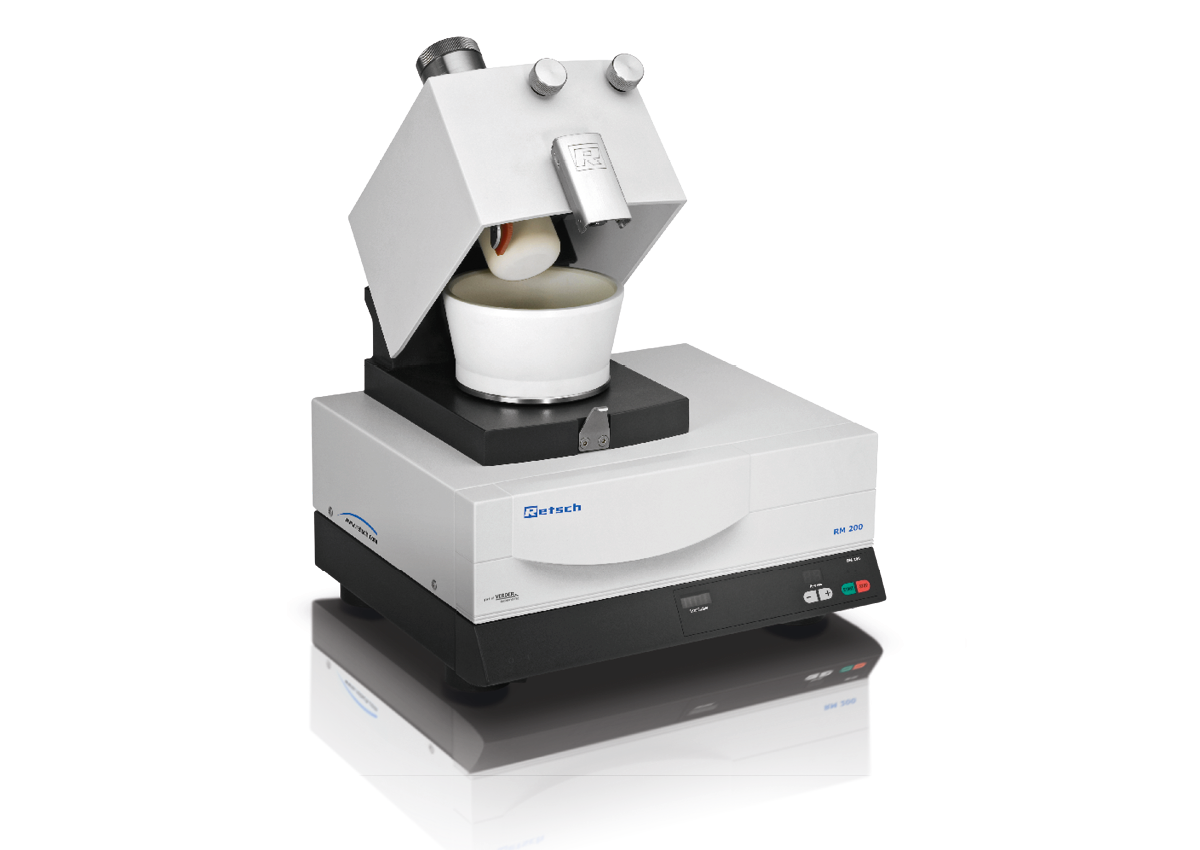
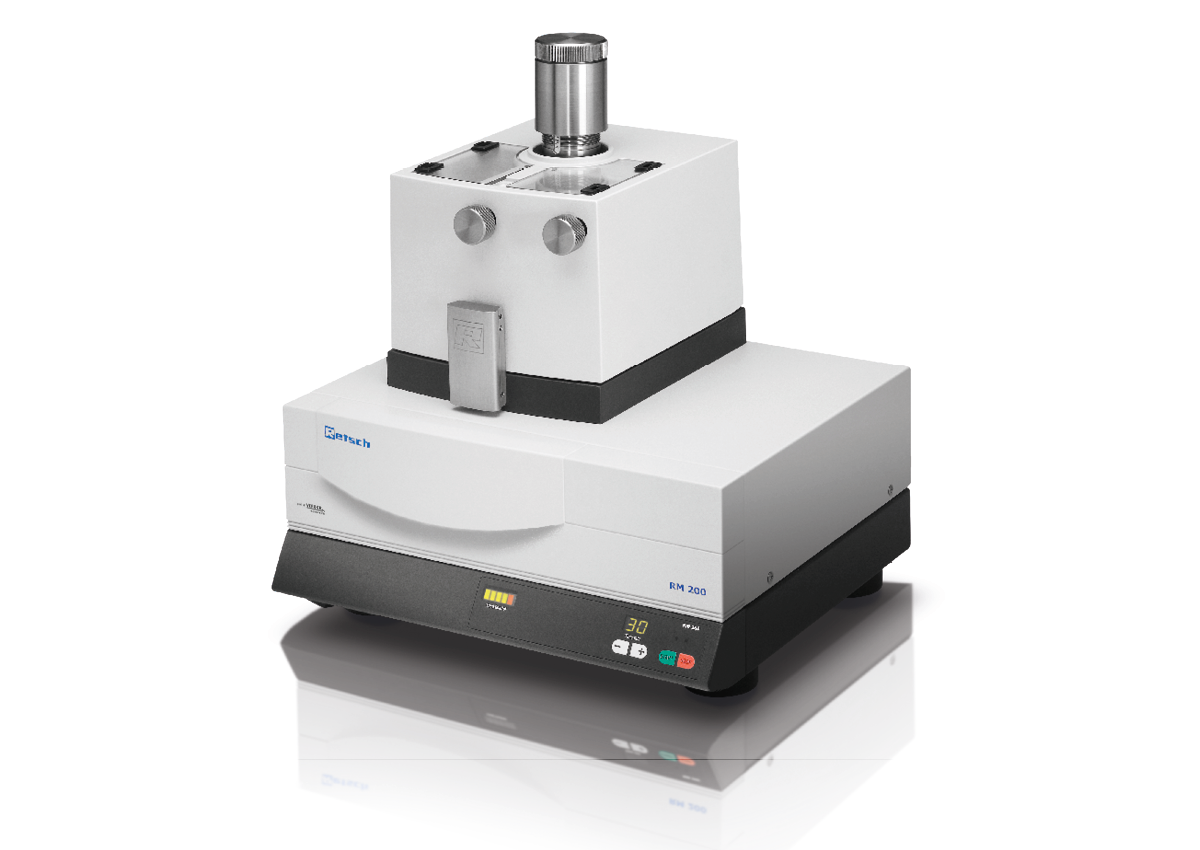

Broyeur à mortier RM 200 Caractéristiques techniques
| Applications: | grinding, mixing and triturating, dry and wet |
|---|---|
| Field of application: | agriculture, biology, chemistry / plastics, construction materials, food, geology / metallurgy, glass / ceramics, medicine / pharmaceuticals |
| Feed material: | soft, hard, brittle, pasty |
| Size reduction principle: | pressure, friction |
| Final fineness: | < 10 µm |
| Batch size / feed quantity: | 10 - 190 ml |
| Grinding chamber volume: | 700 ml |
| Speed at 50 Hz (60 Hz): | 100 min-1 |
| Speed setting: | no |
| Setting of pestle pressure: | vertical by adjusting knob + scale, horizontal by adjusting knob + visual/acoustic control |
| Setting of scraper pressure: | by adjusting knob + visual control |
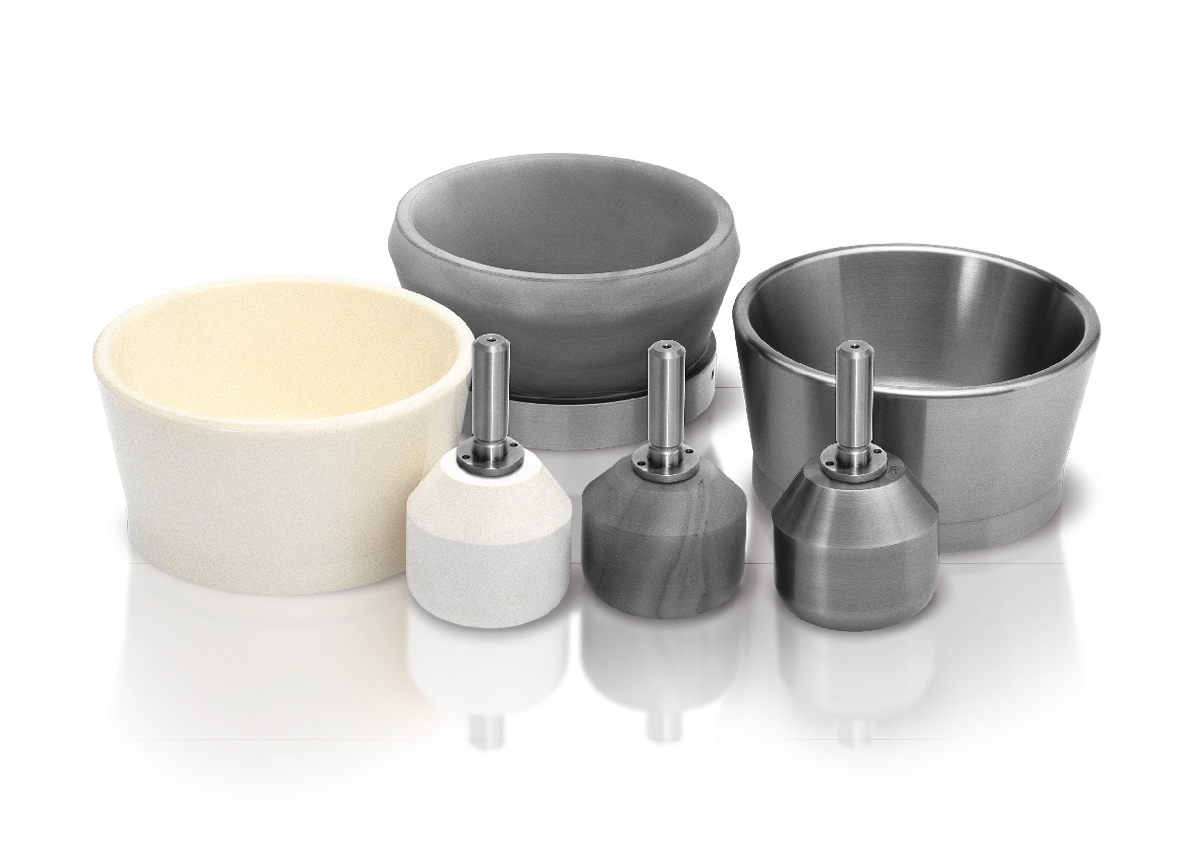
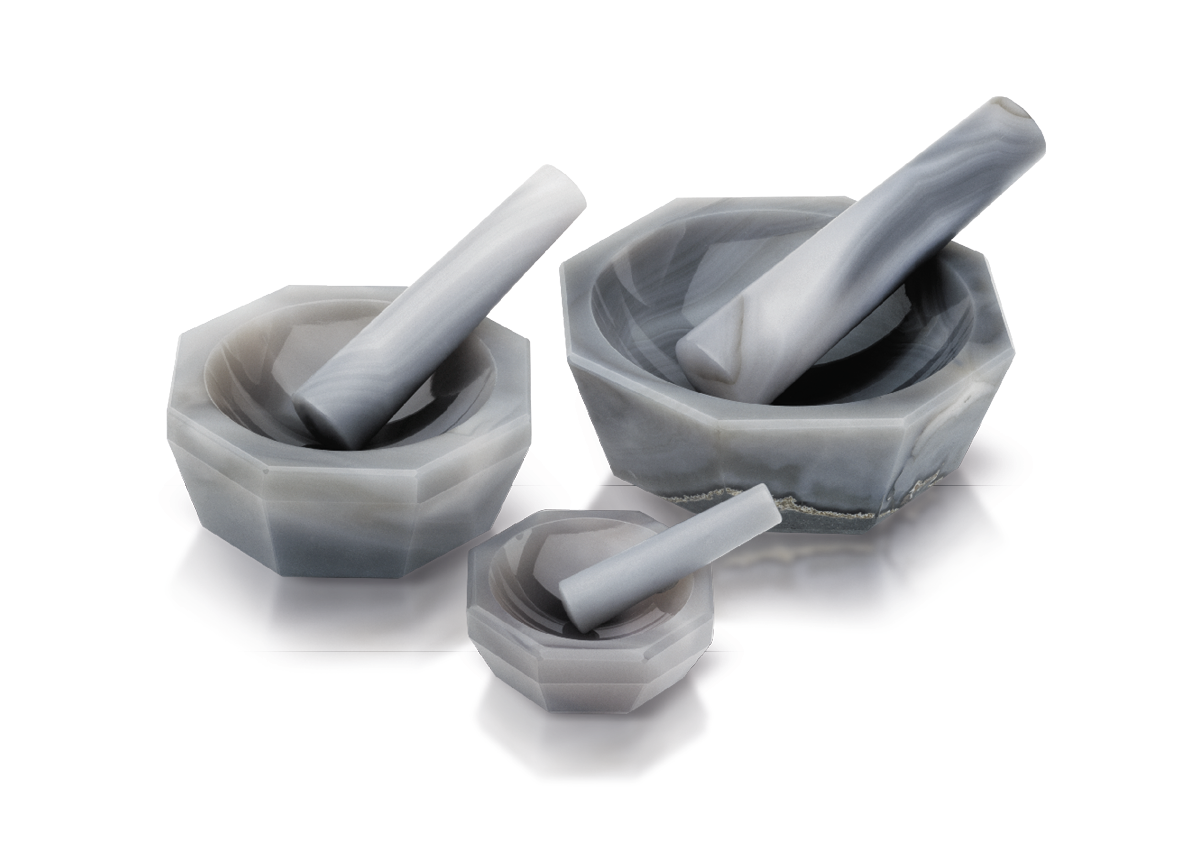
| Material of grinding tools: | hardened steel, stainless steel, tungsten carbide, agate, sintered aluminium oxide, zirconium oxide, hard porcelain |
| Setting of grinding time: | digital, 1 - 99 min / continuous operation |
| Drive: | 1-phase motor with auxiliary capacitor |
| Electrical supply data: | different voltages |
| Power connection: | 1-phase |
| Power consumption: | 250 W (230 V, 50 Hz) / 290 W (120 V, 60 Hz) |
| Protection code: | IP 53 |
| W x H x D closed: | 400 x 480 x 370 mm (opened 400 x 550 x 510 mm ) |
| Net weight: | ~ 24.2 kg |
| Standards: | CE |
Broyeur à mortier RM 200 Téléchargement
Catalogue général
Fiche produit RM 200
Télécharger
pdf Français (~1 MB)
pdf Anglais (~1 MB)
pdf Portugais (~1 MB)
pdf Turque (~1 MB)
pdf Bulgare (~1 MB)
pdf Roumain (~1 MB)
pdf Norvégien (~1 MB)
pdf Allemand (~1 MB)
pdf Japonais (~1 MB)
pdf Espagnol (~1 MB)
pdf Coréen (~1 MB)
pdf Slovaque (~1 MB)
pdf Tchèque (~1 MB)
pdf Polonais (~1 MB)
pdf Italien (~1 MB)
pdf Russe (~1 MB)
pdf Chinois (~1 MB)
pdf Néerlandais (~1 MB)
pdf Hongrois (~1 MB)
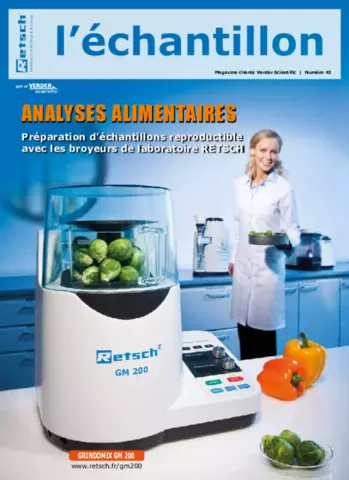
L'échantillon - Magazine clients No. 43
Préparation d’échantillons reproductible avec les broyeurs de laboratoire RETSCH
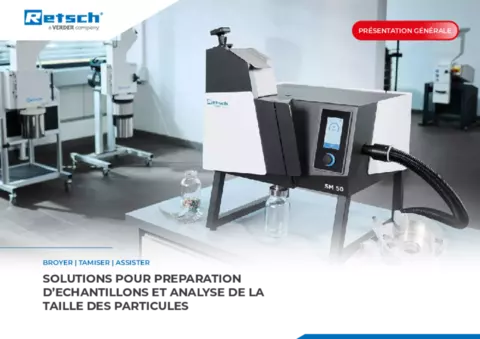
Présentation Générale
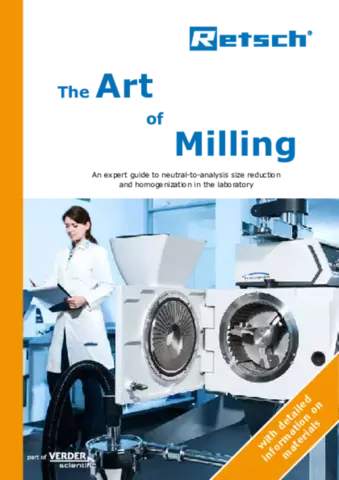
Expert Guide Milling
Why Size Reduction? A reliable and accurate analysis can only be guaranteed by reproducible sample preparation. The "Art of Milling" describes the process of turning a laboratory sample into a representative part sample with homogeneous analytical fineness.