



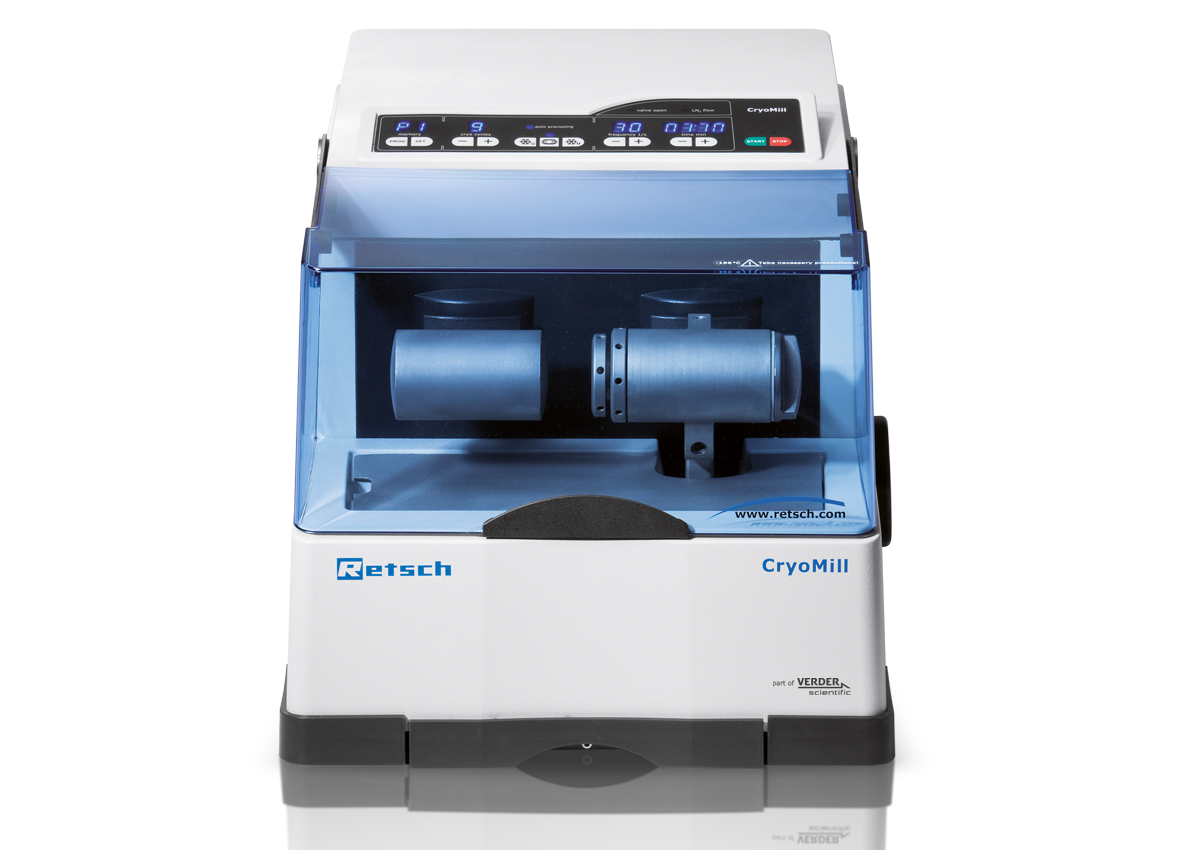
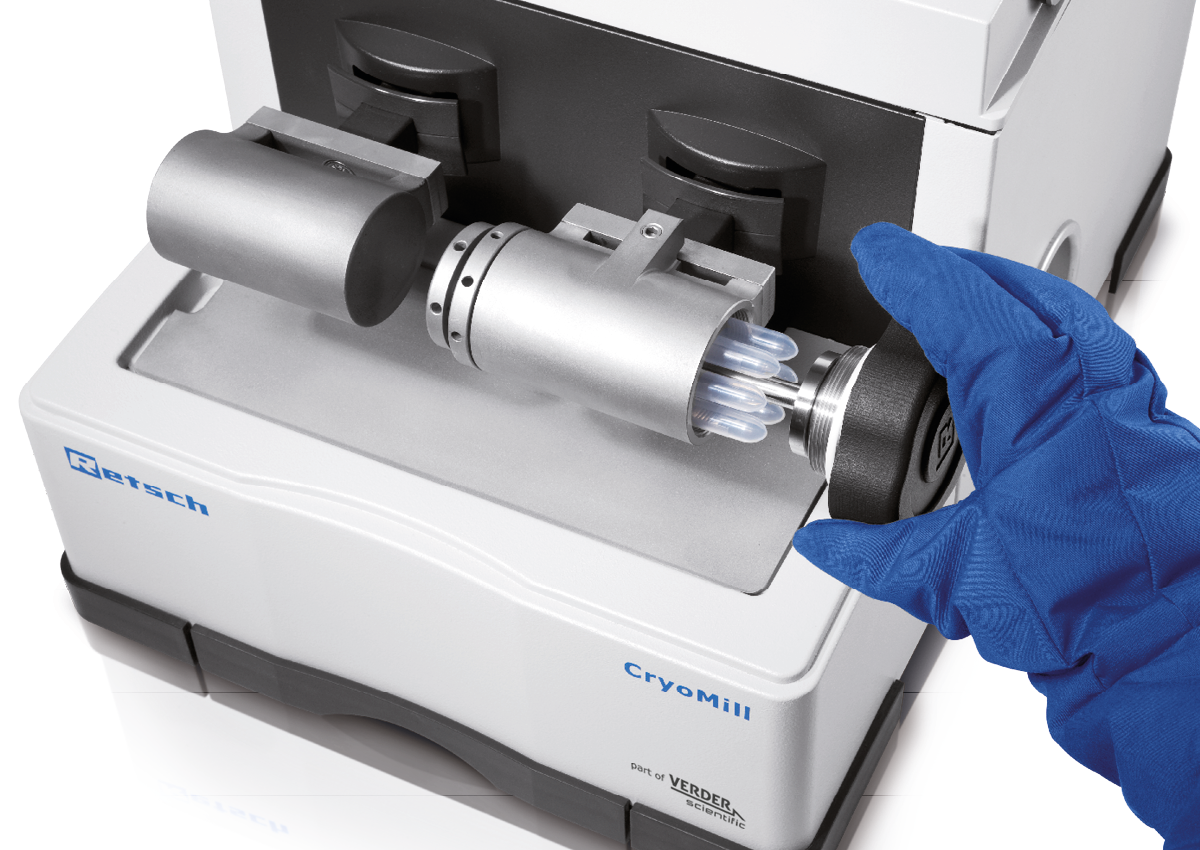
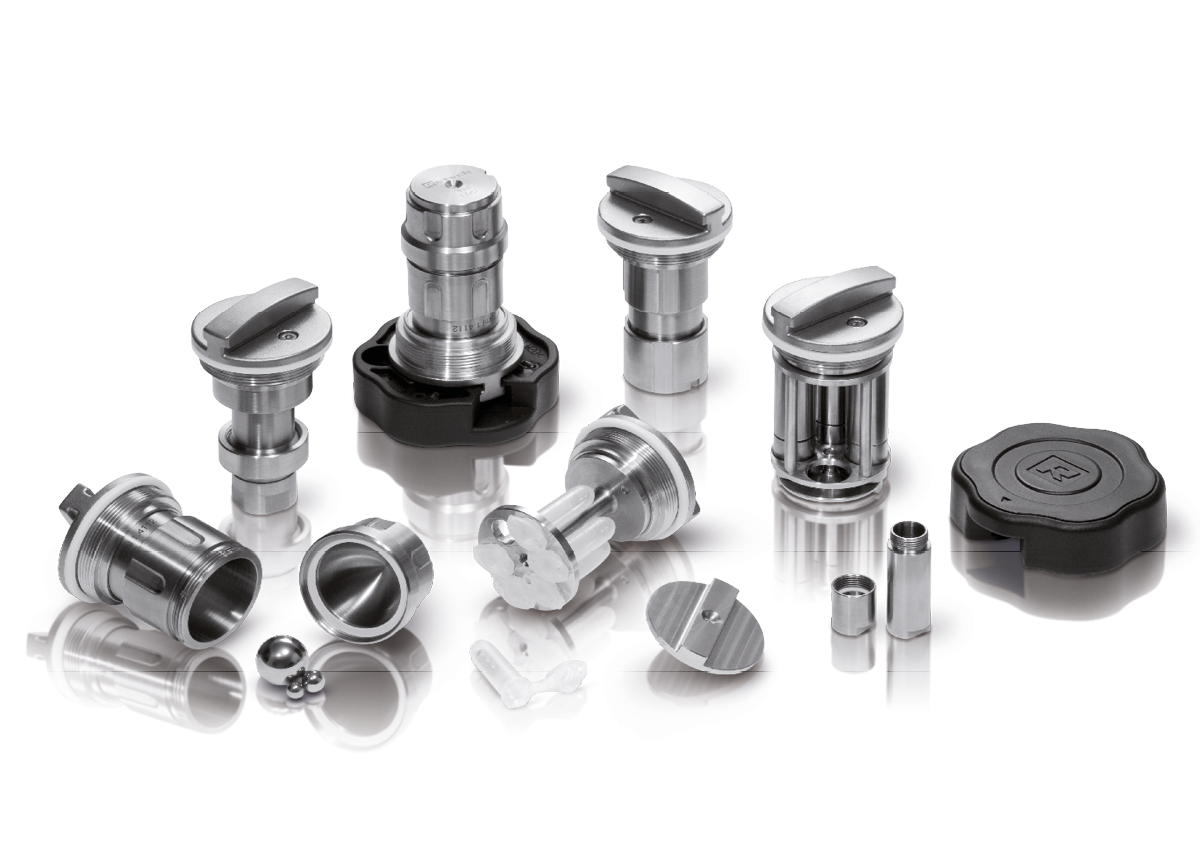

Kryogénny mlyn CryoMill Technické údaje
| Applications: | size reduction, mixing, homogenization, cell disruption |
|---|---|
| Field of application: | agriculture, biology, chemistry / plastics, construction materials, engineering / electronics, environment / recycling, food, geology / metallurgy, glass / ceramics, medicine / pharmaceuticals |
| Feed material: | hard, medium-hard, soft, brittle, elastic, fibrous |
| Size reduction principle: | impact, friction |
| Max. feed size: | <= 8 mm |
| Final fineness: | ~ 5 µm |
| Batch size / feed quantity: | max. 20 ml |
| No. of grinding stations: | 1 |
| Vibrational frequency: | digital, 5 - 30 Hz (300 - 1800 min-1) |
| Typical mean grinding time: | 10 min / 4 min (cooling / grinding) |
| Dry grinding: | yes |
| Wet grinding: | yes |
| Cryogenic grinding: | yes |
| Cell disruption with reaction vials: | yes |
| Self-centering clamping device: | yes |
| Type of grinding jars: | screw top design |
| Material of grinding tools: | hardened steel, stainless steel, zirconium oxide, PTFE |
| Grinding jar sizes: | 5 ml / 10ml / 25 ml / 35 ml / 50 ml |
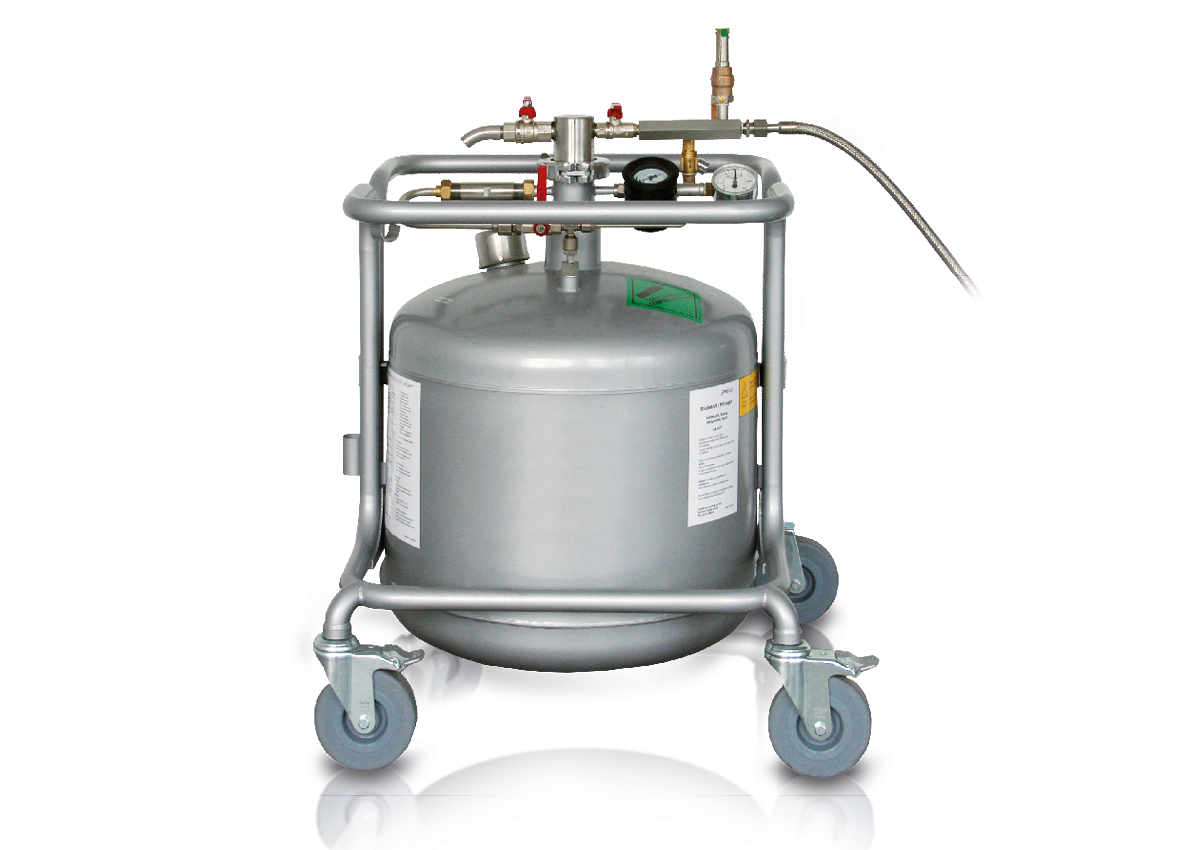
| Autofill: | 50 l |
| Setting of grinding time: | digital, 30 s - 99 min |
| Storable SOPs: | 9 |
| Electrical supply data: | 100-240 V, 50/60 Hz |
| Power connection: | 1-phase |
| Power consumption: | 260 W |
| Protection code: | IP 30 |
| W x H x D closed: | 395 x 373 x 577 mm (D: 710 mm with exhaust tube) |
| Net weight: | ~ 45 kg |
| Standards: | CE |
Kryogénny mlyn CryoMill Na stiahnutie
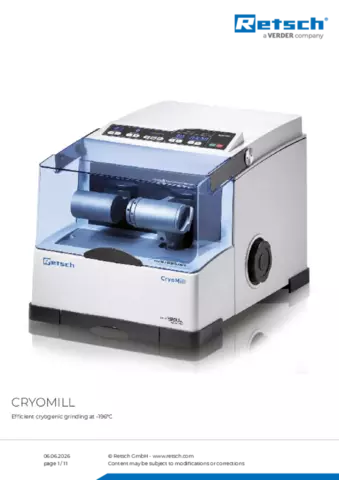
Product data sheet Cryomill
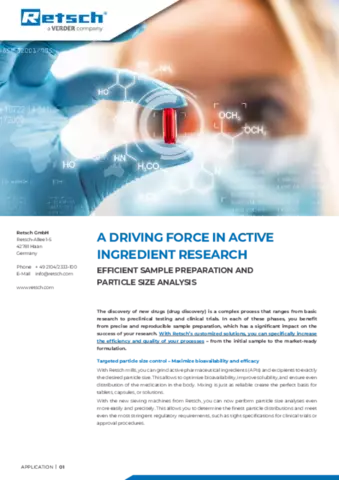
A driving force in ingredient research
The discovery of new drugs (drug discovery) is a complex process that ranges from basic research to preclinical testing and clinical trials. In each of these phases, you benefit from precise and reproducible sample preparation, which has a significant impact on the success of your research. With Retsch’s customized solutions, you can specifically increase the efficiency and quality of your processes – from the initial sample to the market-ready formulation.
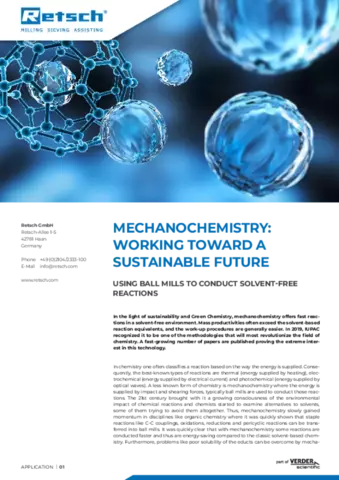
Mechanochemistry: Working Toward a Sustainable Future
In the light of sustainability and Green Chemistry, mechanochemistry offers fast reactions in a solvent-free environment. Mass productivities often exceed the solvent-based reaction equivalents, and the work-up procedures are generally easier. Beside thermal, electrochemical and photochemical energy supply, a less known form of mechanochemistry is based on energy input by impact and shearing forces; typically ball mills are used to conduct those reactions. This article gives examples how mixer mills and planetary ball mills are successfully used to conduct mechanochemical processes.