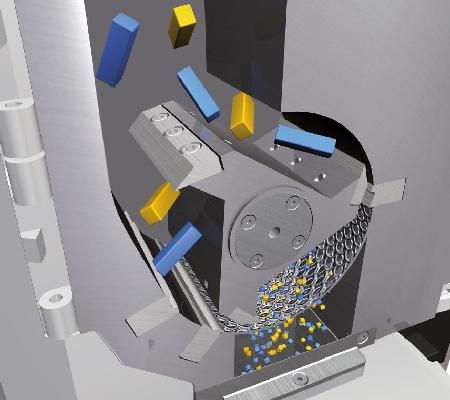




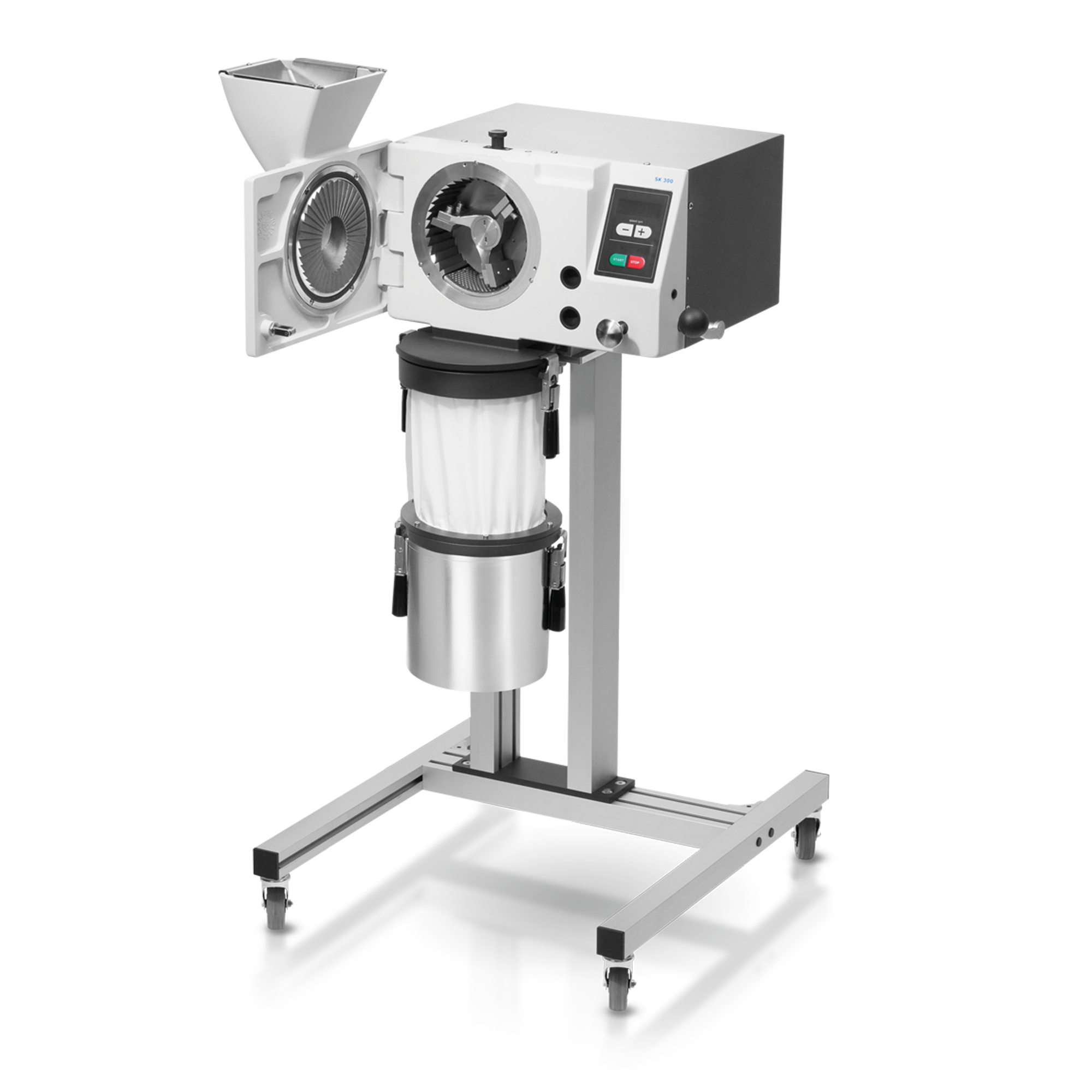
Режущие мельницы RETSCH успешно используются для эффективного предварительного измельчения огромного количества материалов. Мельницы обеспечивают высокий уровень безопасности и удобства работы. Широкий выбор дополнительных принадлежностей дает возможность легкой адаптации к требованиям различных применений.
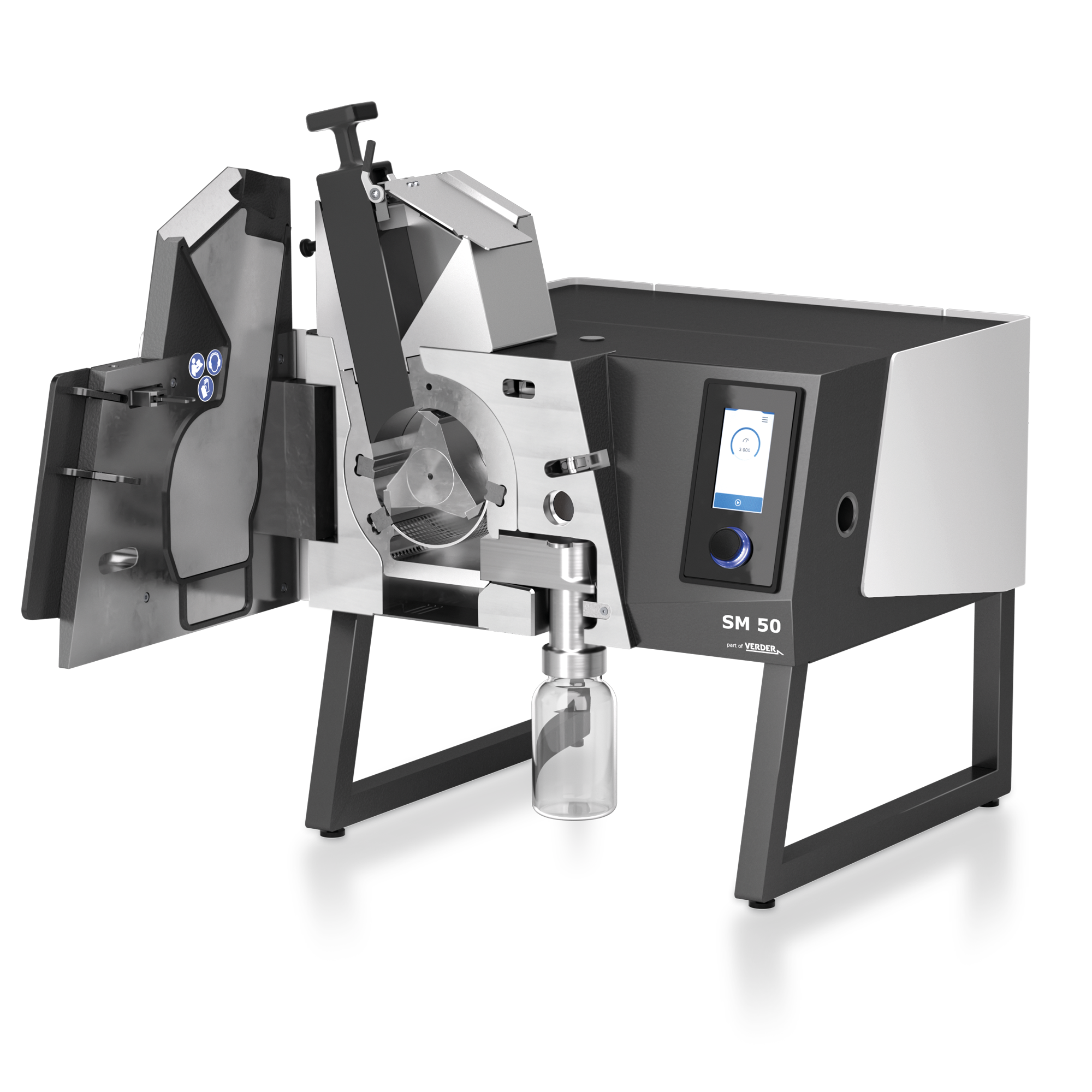
- Feed material: soft, medium-hard, elastic, fibrous
- Max. feed size: < 60 x 80 mm
- Final fineness: 0.25 - 20 mm
- Speed at 50 Hz (60 Hz): 1,500 min-1
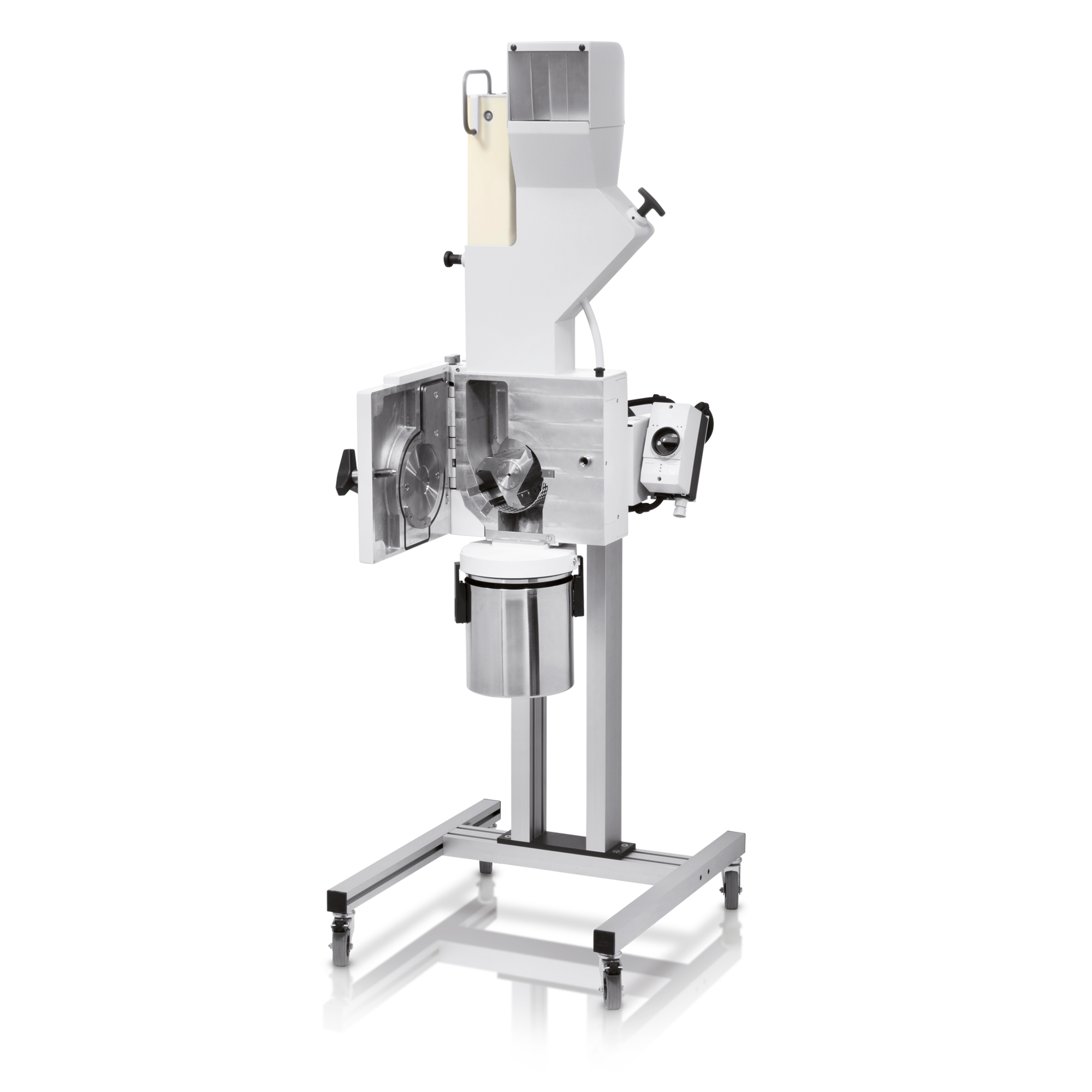
- Feed material: soft, medium-hard, tough, elastic, fibrous
- Max. feed size: < 60 x 80 mm
- Final fineness: 0.25 - 20 mm
- Speed at 50 Hz (60 Hz): 1,500 min-1
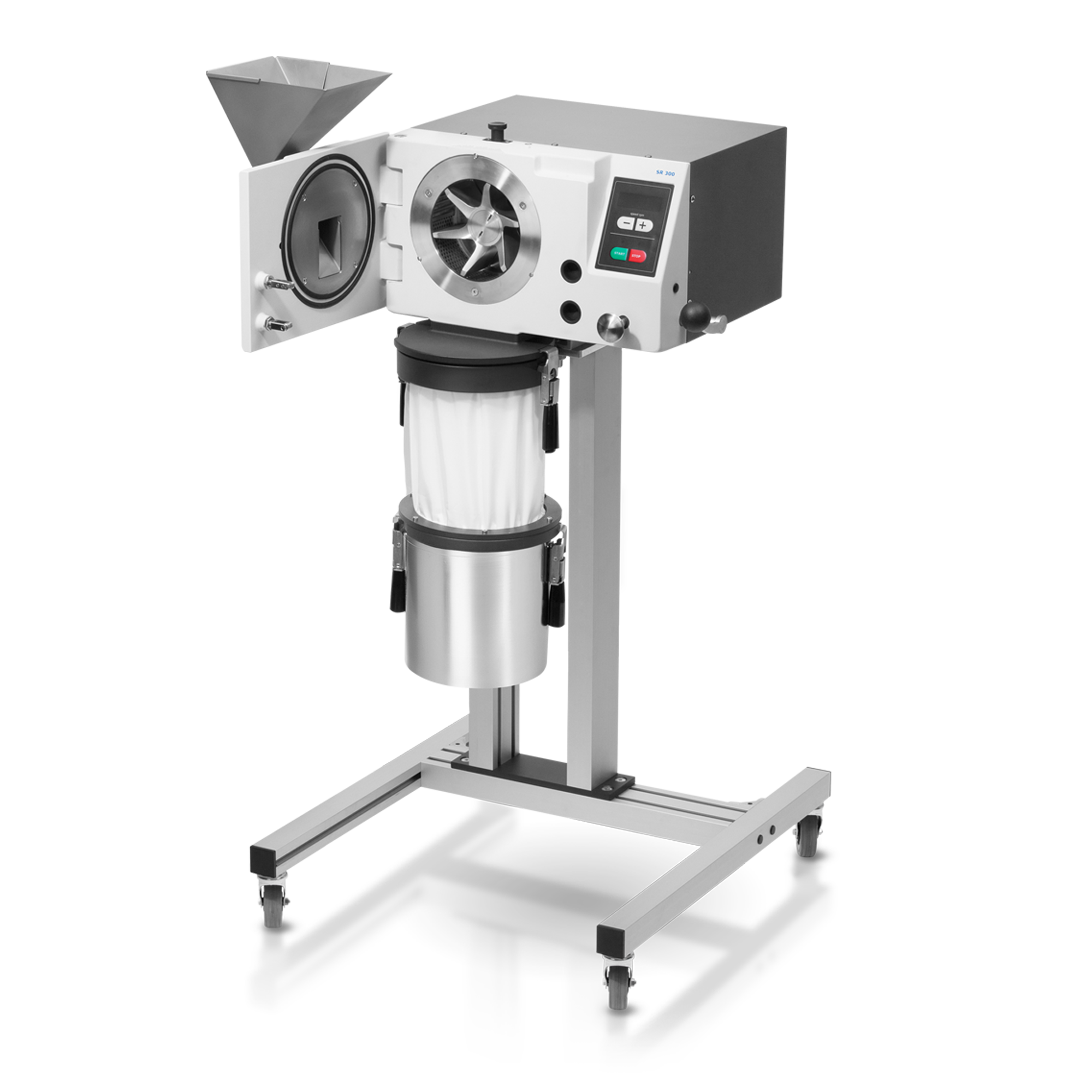
- Feed material: medium-hard, brittle
- Max. feed size: < 25 mm
- Final fineness: < 100 µm
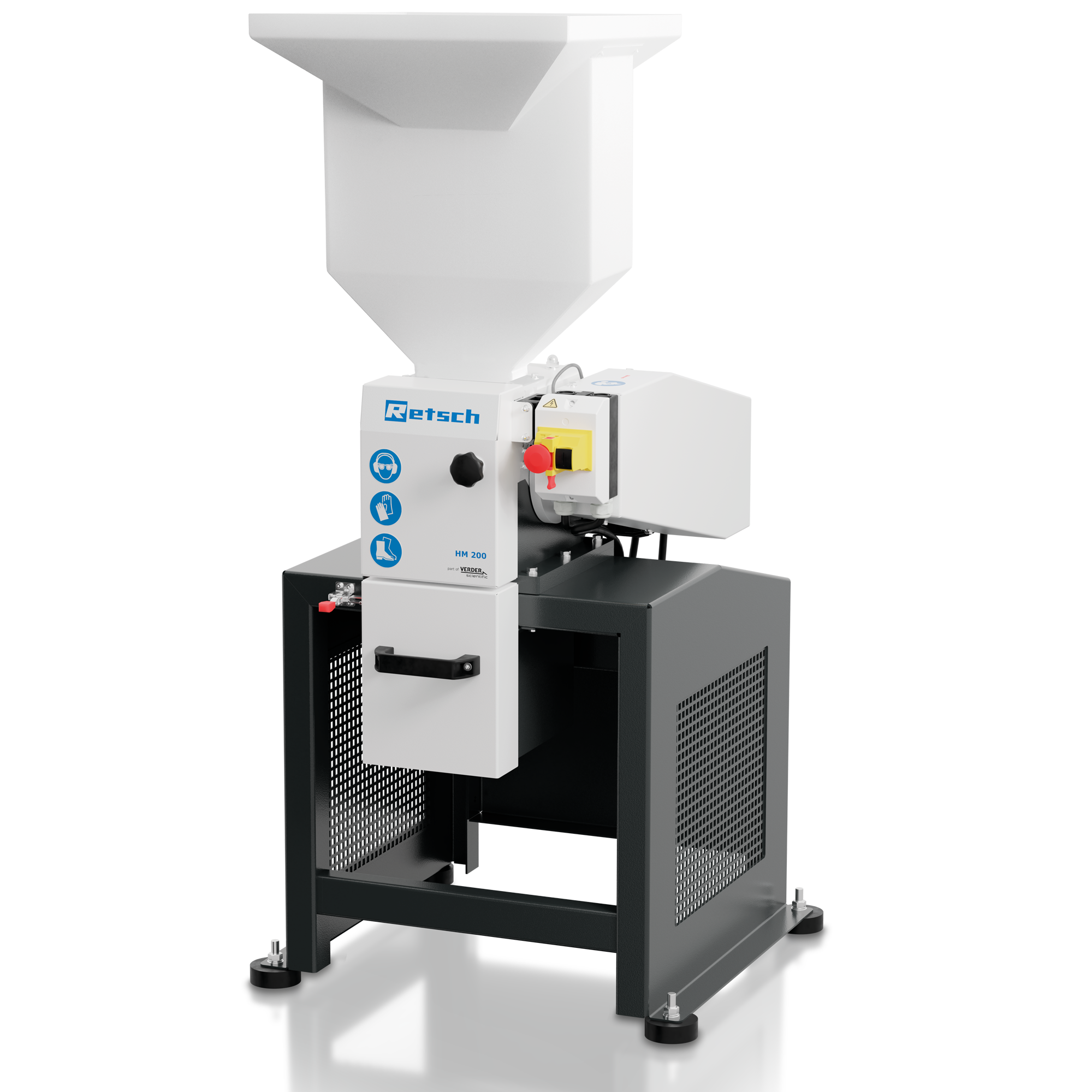
- Feed material: medium-hard, hard, brittle, tough, fibrous
- Max. feed size: < 100 mm
- Final fineness: < 0.8 mm
CUTTING MILL FEATURES
- Powerful size reduction – also of heterogeneous material mixes
- Selection of different cutting mill models to suit customer requirements
- Optimum cutting effects thanks to double acting cutting bars (SM 200 & SM 300)
- Cutting Mill SM 300 with variable speed from 700 to 3,000 min-1, 3 kW drive with high torque
- Rotational Energy Storage Technology (RES) provides exceptional cutting power reserves (SM 300)
- Defined final fineness due to bottom sieves with aperture sizes from 0.25–20 mm
- Low heat build-up
- Quick and easy cleaning thanks to push-fit rotors, smooth surfaces and foldback hoppers (SM 200 and SM 300)
- Highest safety standard due to motor brake, central locking device and electronic safety check
- Wide range of accessories including various hoppers, collecting systems, rotors and sieves
CUTTING MILL TECHNOLOGY
Size reduction in cutting mills is effected by cutting and shearing forces.
The sample passes through the hopper into the grinding chamber where it is seized by the rotor and is comminuted between the rotor blades and the stationary cutting bars inserted in the housing.
The dwelling time of the sample in the chamber is short; as soon as it is small enough to pass through the openings of the bottom sieve it is discharged and collected in the receptacle.