




机械化学 利用球磨机进行无溶剂机械化学反应
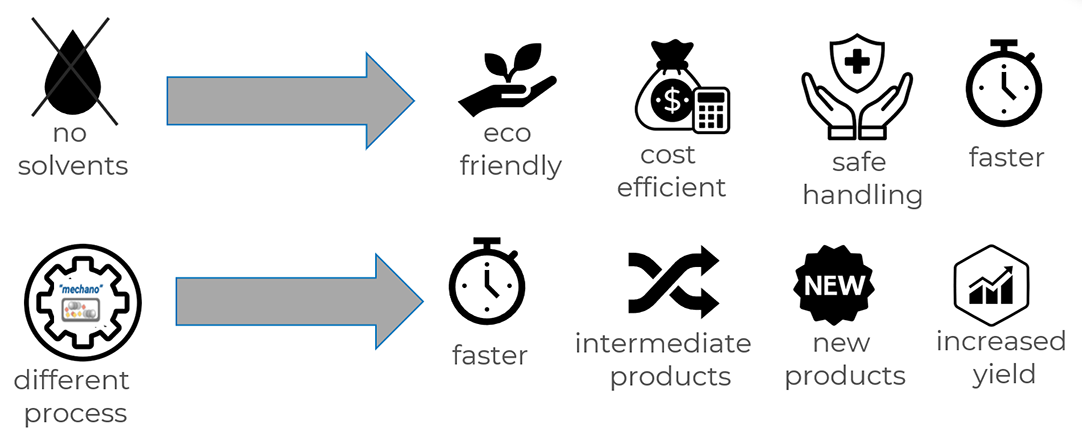
机械化学是利用冲击力和摩擦力引发化学反应的化学分支--通常是通过使用球磨机--因其环境效益而备受关注。随着环境问题日益受到关注,化学家们开始寻求无溶剂替代品,而机械化学则提供了一条大有可为的途径。与传统的溶剂方法相比,这种方法不仅能加快反应速度,从而节约能源,还能解决反应物溶解度低等难题。它能实现在溶剂中不可行的反应,并能稳定和纯化中间物质。因此,机械化学为提高工艺的可持续性和开发新型反应开辟了新途径。RETSCH 站在最前沿,为在研磨罐中进行化学反应提供最全面的球磨机和最佳配件。
与溶剂型工艺相比,机械化学反应有何优势?
- 无溶剂工艺可消除多达 90% 的反应物,提高了成本效益和环境安全性,同时缩短了确定反应最佳溶剂所需的时间。
- 与基于溶剂的方法相比,机械化学可容纳不溶解的反应物、稳定中间产物并提供独特的反应,因此探索新的反应途径变得可行。
- 这种方法节省时间,通常几分钟到几小时就能完成反应,而使用溶剂则需要几天。
- 在合适的条件下,可以获得更高的产量
机械化学是如何工作的?
在机械化学中,能量应用和混合方法至关重要。行星式球磨机主要利用摩擦力来减小粒度,而混合磨机则依靠冲击力。某些反应在行星式球磨机中进行更为有效,而另一些反应则受益于混合磨机的冲击模式。目前,人们正在研究温度和混合对机械化学反应的不同影响,因为驱动这些反应的精确机制仍有待充分了解。
机械化学反应的功效提出了几个问题:是否是撞击产生的能量推动了这些反应,更多的能量是否总能改善结果?球是否不仅能产生新的反应表面,还能加强混合?与可溶体系相比,相对较高的溶液浓度是否起了重要作用?此外,球碰撞时产生的高温是否也起了作用,还是这些因素的综合作用? 球的最佳尺寸是另一个考虑因素;球太小可能会导致反应物结块和混合不充分,而球太大可能会导致反应碰撞减少。理想的研磨球直径范围为 5 至 15 毫米。磨具材料(如氧化锆或不锈钢)的选择也至关重要。材料必须能抵抗化学反应,不干扰加工过程,并保持机械稳定性,以尽量减少磨损。
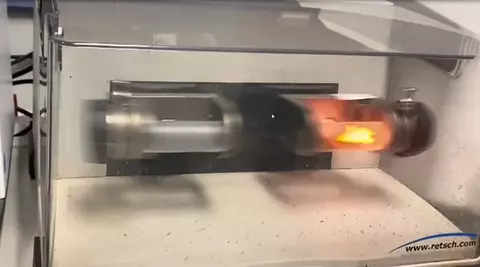
机械诱导自传播反应(MSR)是一种由机械能(如球磨仪提供的能量)引发的快速放热化学反应,该反应可在无需外部加热的情况下沿材料内部传播。视频展示了镍与硫之间的一种机械化学反应,该反应在特定条件下可转化为MSR。视频尾声处可见闪光瞬间,这正是MSR点火过程的实证记录。本视频经Matej Baláž授权使用。 [11]
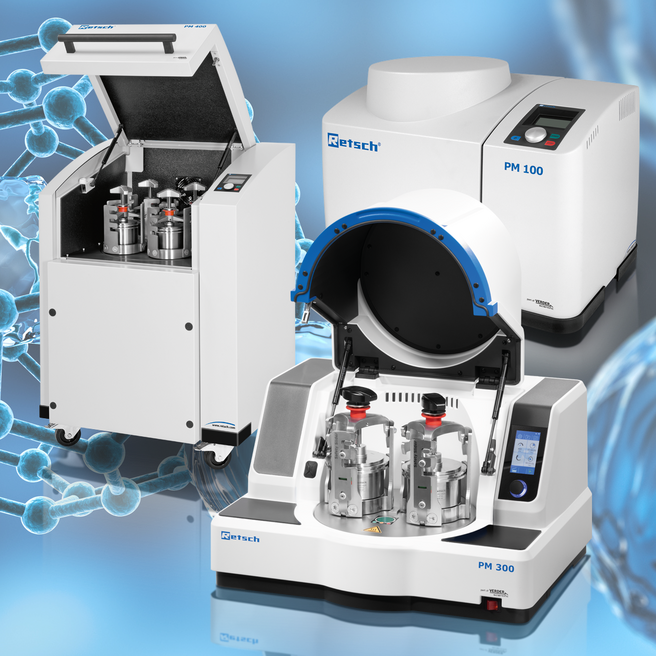
用于机械合成的球磨机
球磨机可精确控制反应条件,能量输入范围广,并可在密封容器中进行反应。行星式球磨机和混合磨通常用于机械化学反应。这两种类型的功能原理在某些方面有所不同。
行星式球磨仪
研磨罐偏心地安装在行星式球磨机的太阳轮上。太阳轮的运动方向与研磨罐的运动方向相反,比例为 1:-2、1:-2.5 或 1:-3。研磨罐中的研磨球受到叠加的旋转运动,即所谓的科里奥利力。研磨球和研磨罐之间的速度差产生了摩擦力和冲击力之间的相互作用,从而释放出很高的动能。
RETSCH提供四种型号的行星式球磨仪,可容纳1、2或4个研磨罐,容量从12毫升到500毫升不等。
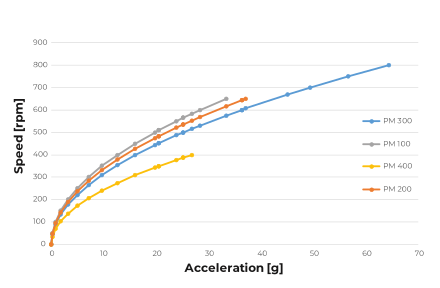
PM300的转速比为1:-2,但与其他型号不同的是,它的最高转速为800转/分钟,并配有大型太阳轮,因此重力加速度可达64.4倍。这款行星式球磨仪可使用四个可堆叠的小研磨罐(12 至 80 毫升)进行小规模操作,也可使用两个研磨罐(500 毫升)进行大规模操作,非常适合机械化学领域的研究应用。
高能球磨仪 Emax
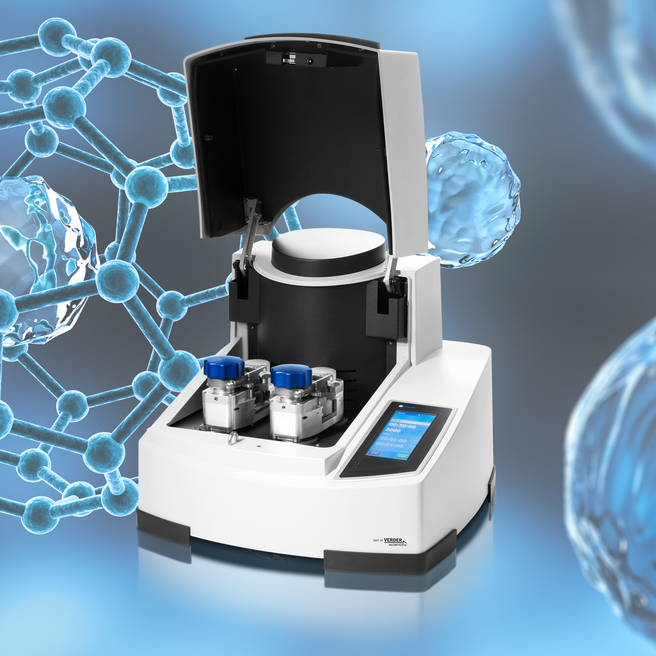
高能球磨仪 Emax 是一种特殊的行星式球磨仪。
研磨罐的几何形状和运动相互作用,使研磨球、样品材料和罐壁之间产生强烈摩擦,并产生快速加速度,使研磨球在研磨罐的圆形端部以巨大的力量撞击样品。
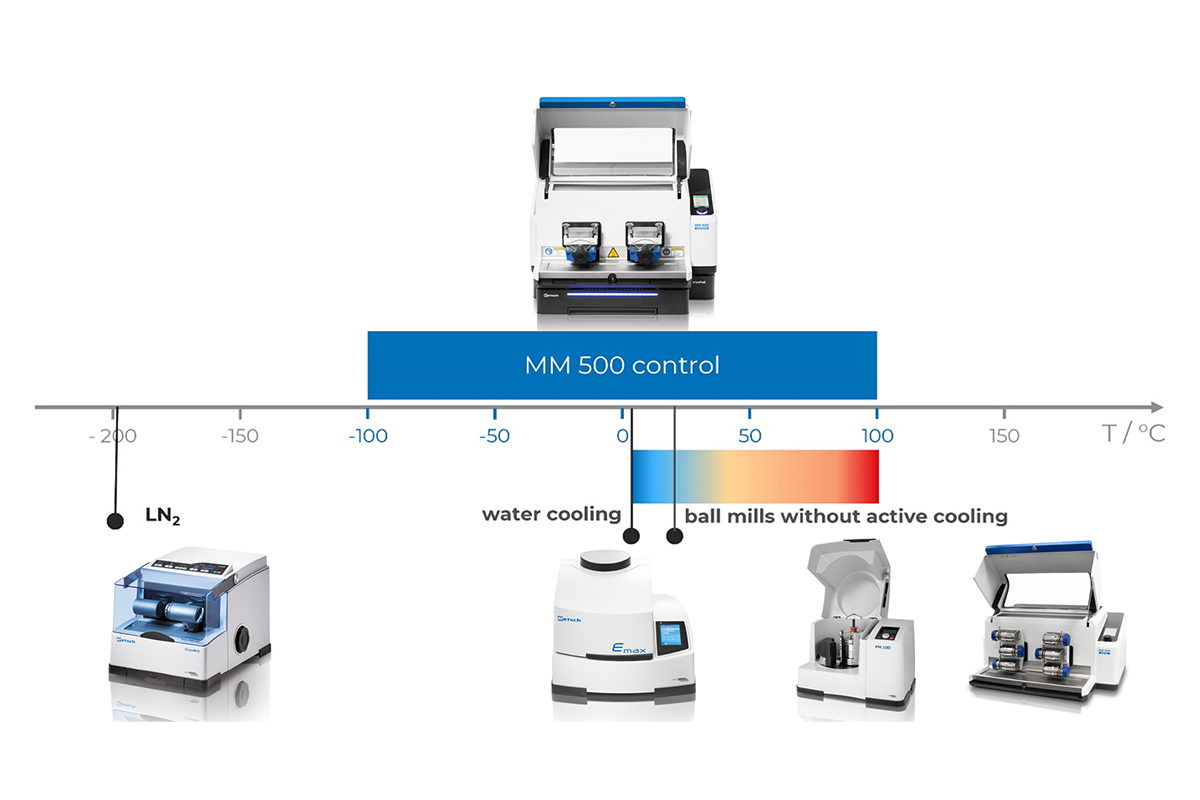
独特的水冷系统可确保样品温度稳定,从而实现高能量输入的研磨过程。Emax 可在规定的温度范围内运行,用户可通过设定最低和最高温度来选择温度范围。如果超过最高温度,研磨机会自动中断研磨过程,只有达到最低温度时才会重新开始。
混和型研磨仪
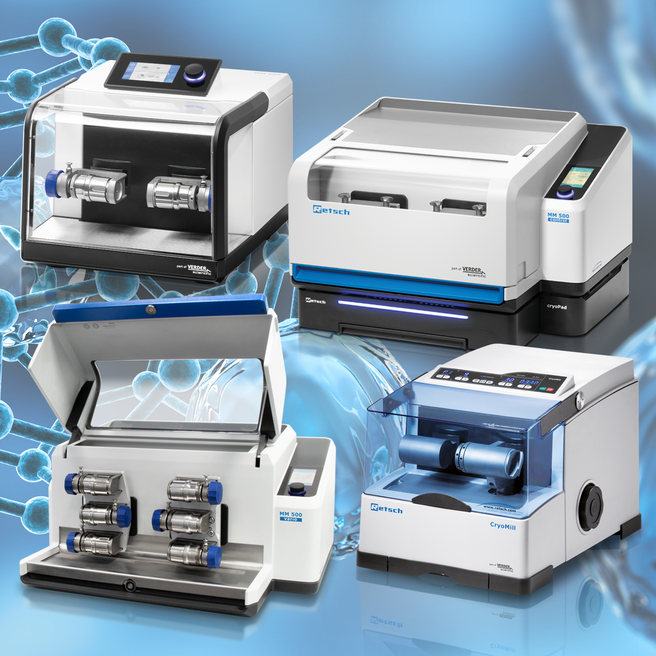
混合碾磨机的破碎模式主要基于冲击力。研磨罐在水平位置进行径向摆动。研磨球的惯性使它们以高能量撞击研磨罐圆形端部的样品材料并将其粉碎。RETSCH 还提供五种型号的混合磨。MM 400 通常用于机械化学,因为它使用方便,设计小巧紧凑。
CryoMill可通过液氮将罐内样品持续冷却至-196°C。MM 500 vario 最多可容纳 6 个研磨罐,最高频率为 35 Hz,能量水平高于 MM 400。MM 500 nano 专为生产纳米颗粒而设计,但也能以 35 Hz 的频率提供机械化学所需的能量输入。
机械化学领域最有趣的机器是 MM 500 control,它可在 -100 °C 至 +100 °C 的温度范围内运行。
速度或频率对机械化学产量的影响
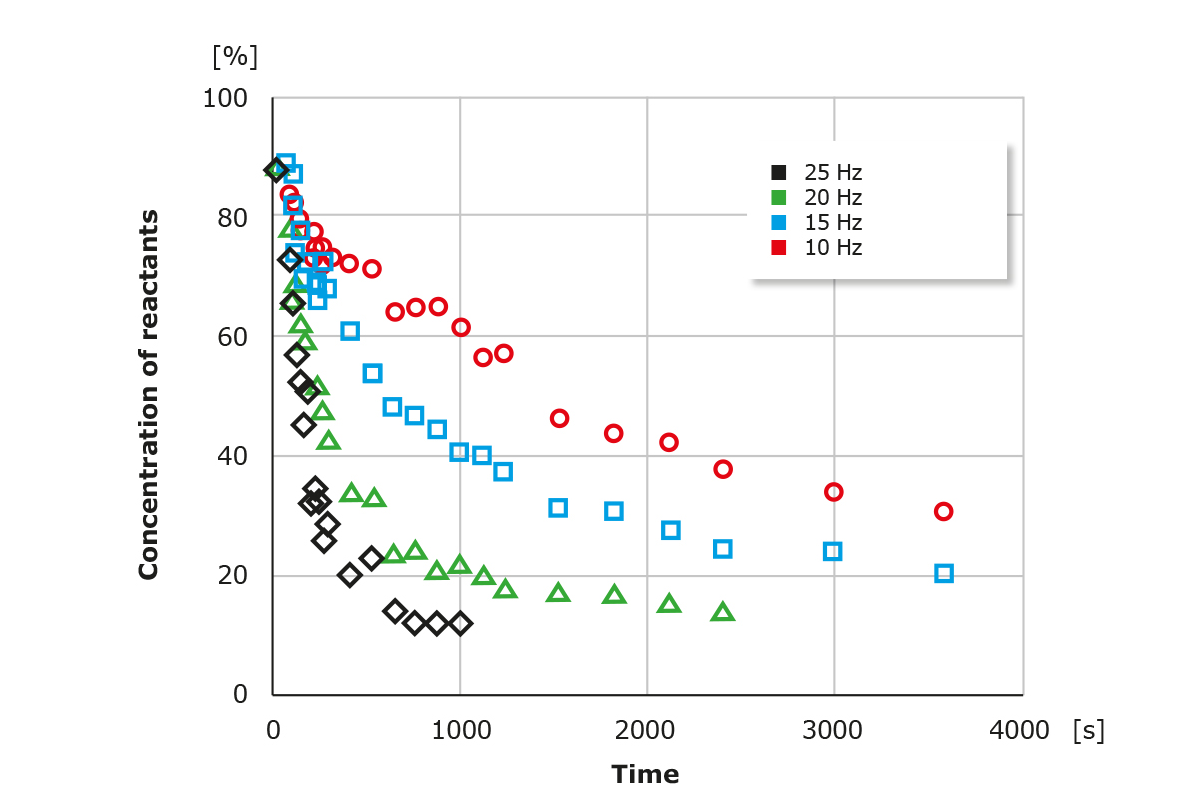
在机械化学中,能量应用和混合方法至关重要。行星式球磨机主要利用摩擦力来减小粒度,而混合磨机则依靠冲击力。某些反应在行星式球磨机中进行更为有效,而另一些反应则受益于混合磨机的冲击模式。目前,人们正在研究温度和混合对机械化学反应的不同影响,因为驱动这些反应的精确机制仍有待充分了解。
机械化学反应的功效提出了几个问题:是否是撞击产生的能量推动了这些反应,更多的能量是否总能改善结果?球是否不仅能产生新的反应表面,还能加强混合?与可溶体系相比,相对较高的溶液浓度是否起了重要作用?此外,球碰撞时产生的高温是否也起了作用,还是这些因素的综合作用? 球的最佳尺寸是另一个考虑因素;球太小可能会导致反应物结块和混合不充分,而球太大可能会导致反应碰撞减少。理想的研磨球直径范围为 5 至 15 毫米。磨具材料(如氧化锆或不锈钢)的选择也至关重要。材料必须能抵抗化学反应,不干扰加工过程,并保持机械稳定性,以尽量减少磨损。
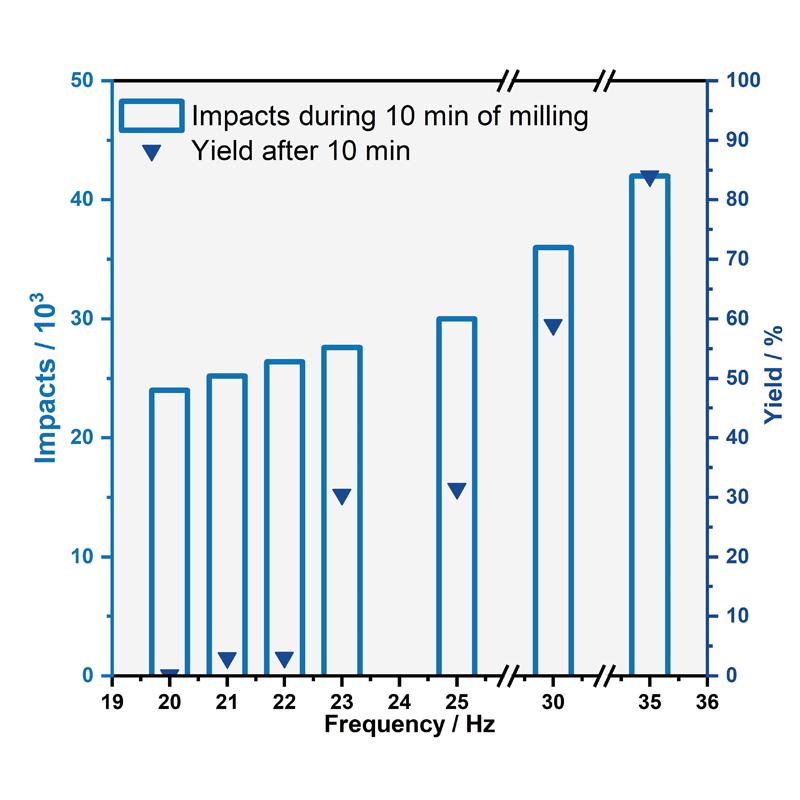
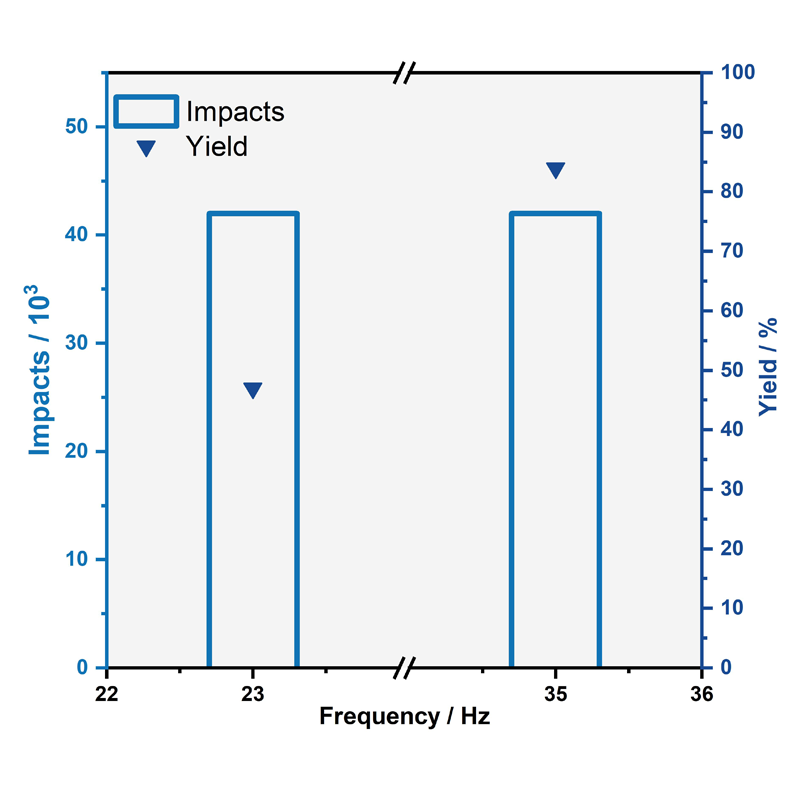
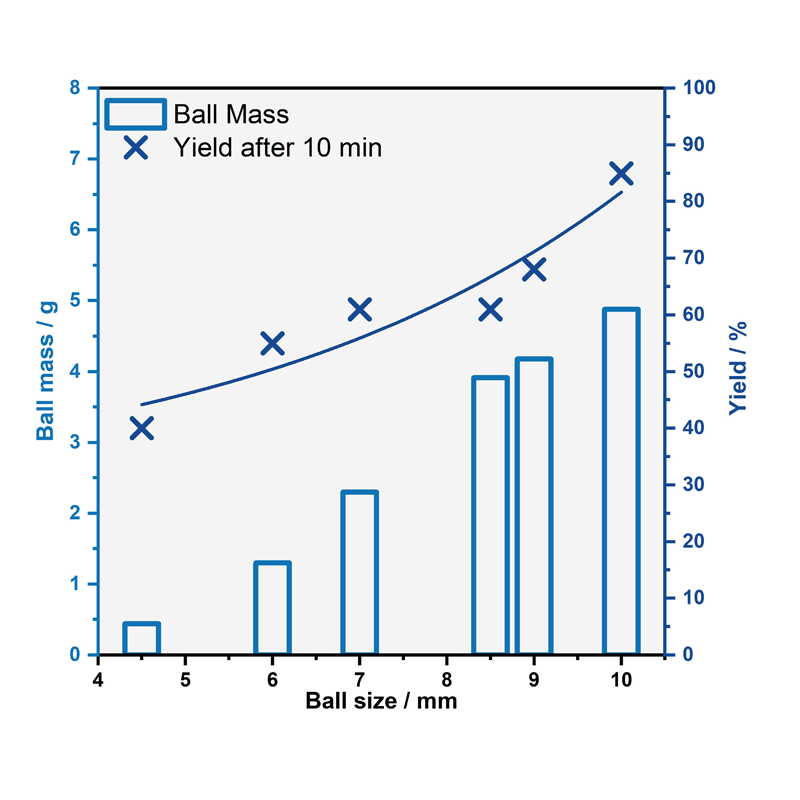
Recent research at the University Utrecht has demonstrated that the efficiency of polypropylene (PP) depolymerization via ball milling in the Mixer Mill MM 500 vario can be dramatically enhanced by optimizing mechanical parameters. When the milling frequency is increased, the rate at which valuable monomers like propene are produced rises sharply. This is because higher frequencies generate more frequent and energetic impacts, which accelerate the cleavage of polymer chains. The effect is highly nonlinear: even modest increases in frequency can lead to exponential gains in product yield, making the process both powerful and tunable. The highest yield was achieved at maximum frequency of 35 Hz. [13]
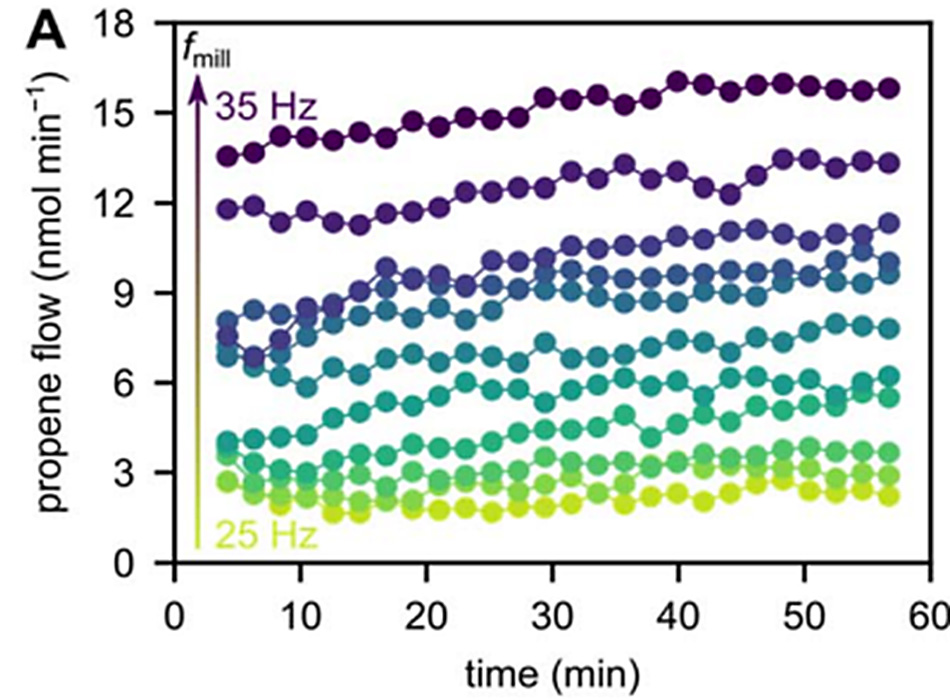
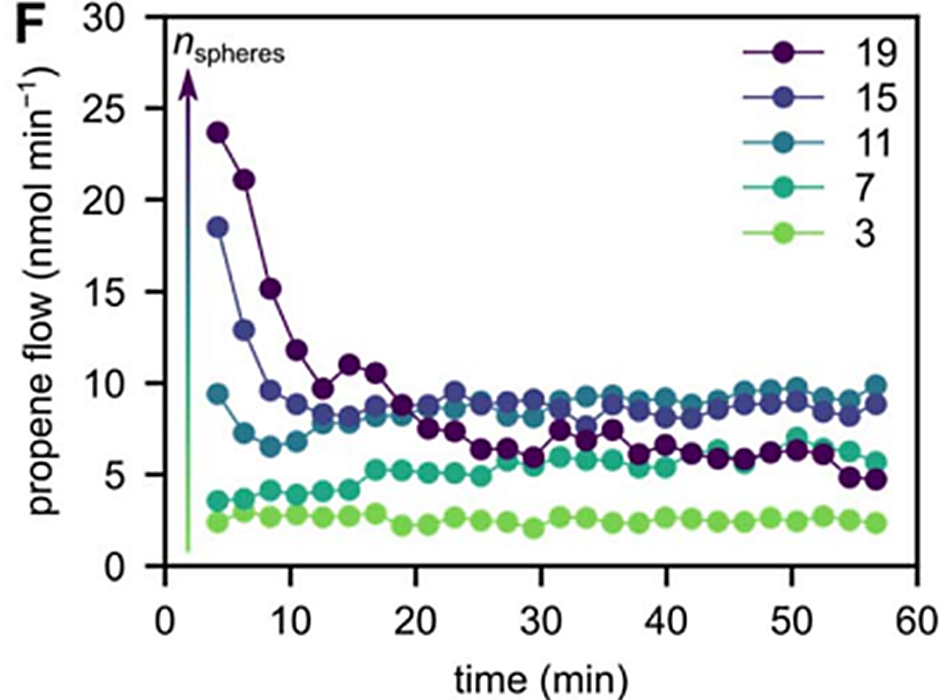
In addition to frequency, the number and size of grinding balls within the grinding jar play a crucial role. Using more balls increases the number of collision events, which in turn boosts the formation of small hydrocarbon molecules. However, there is an optimal range, where the process is most efficient. Beyond this point, adding more balls actually reduces the effectiveness, as it restricts their movement and limits energy transfer. This approach offers a flexible, energy-efficient solution towards the circular economy of plastics.
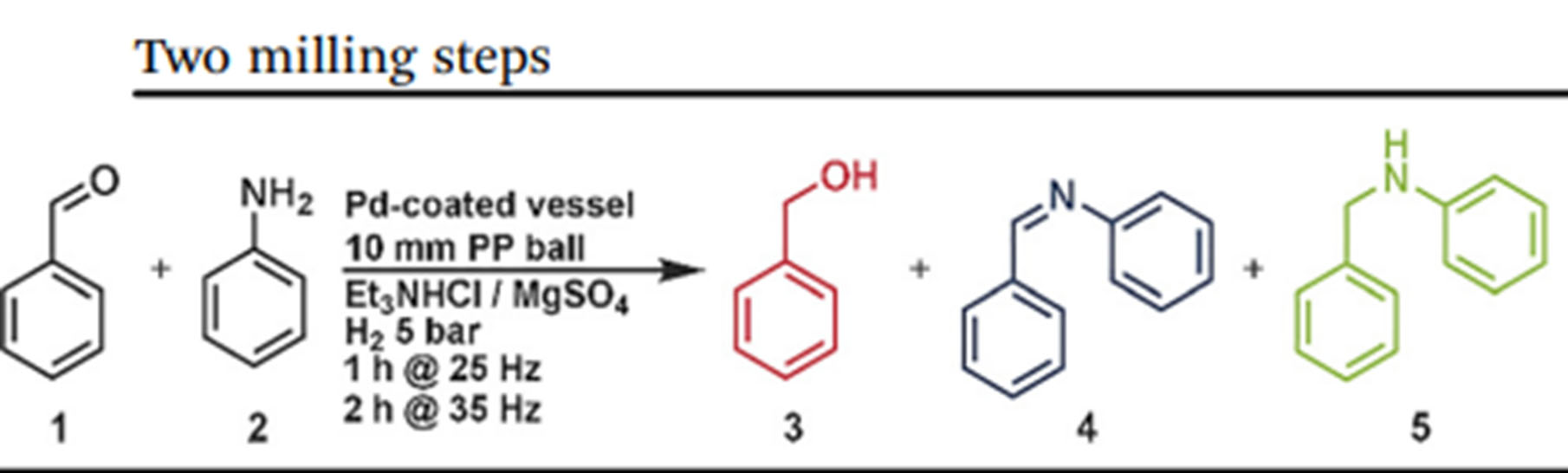
设置两种不同频率可以提升反应能力
与单频操作相比,25 Hz后接35 Hz的顺序研磨显著促进胺的形成。在25 Hz的第一步中,苯甲醛与苯胺通过缩合反应形成亚胺中间体。在35 Hz的第二步中,该亚胺经加氢反应生成目标胺。若仅采用高频处理,苯甲醛将直接氢化生成苯甲醇,导致产生不需要的副产物。反之,若仅采用低频处理,则氢化反应能量不足,亚胺无法转化为胺。该两步法可抑制副反应,实现真正的一锅法工艺,无需处理中间体。总体而言,该方法可获得更高产率和纯度的目标胺,展现出一种稳健且可持续的还原胺化途径。 [12]
高能球磨机
高能量输入大大提高了研磨效率,使粒度分布更细、更均匀。这在最终产品的质量取决于其粒度和分布的应用中至关重要。在机械化学中,能量输入以及作用模式、温度、球磨机尺寸和混合效果都会影响反应结果。为了方便从中等能量到高能量的各种速度的实验,RETSCH 的四种型号尤其值得一提:PM 300、Emax、MM 500 nano 和 MM 500 vario。这些研磨机所能达到的加速度取决于太阳轮尺寸和最高转速(行星式球磨机)或振幅和频率(混合式研磨机)。
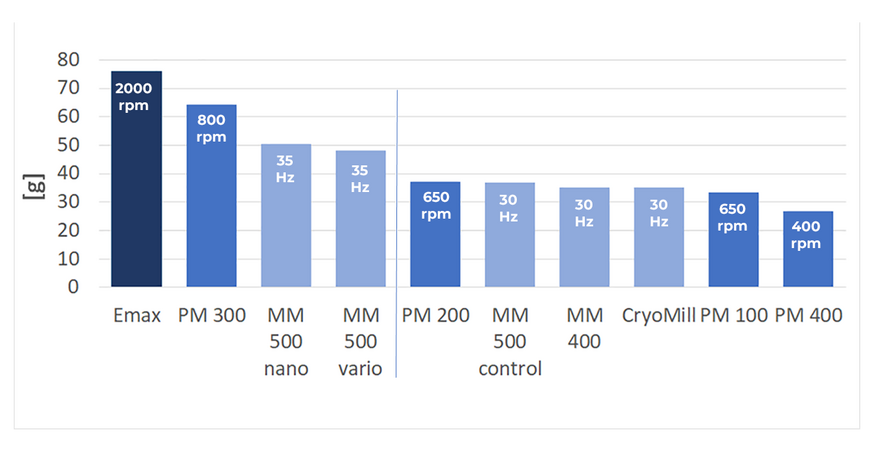
高能球磨仪 Emax 是 RETSCH 产品组合中功能最强大的一款,可实现最高的能量输入,转速可达 2000 rpm,加速度达 76 g。结合其独特的功能原理和研磨罐设计,可产生极窄的粒度分布,最大限度地缩短研磨或反应时间,并生成超细颗粒。
行星式球磨仪 PM 300 采用大型太阳轮,最高转速为 800 转/分钟,加速度可达 64.4 克。该型号可选择使用四个可堆叠的小研磨罐(12 至 80 毫升)进行小规模操作,或使用两个研磨罐(500 毫升)进行大规模操作,非常适合机械化学研究应用。
带有四个研磨站的 PM 400 有速度比 1:-2.5 和 1:-3两种选择,因此能量输入较高,这通常有利于机械化学应用。
混合研磨机 MM 500 nano 和 MM 500 vario 的最高运行频率高达 35 Hz,因此加速度很大。这加快了研磨过程,提高了颗粒细度,并增加了用于机械化学反应的能量输入。
Mechanochemical destruction of forever chemicals in PM 100
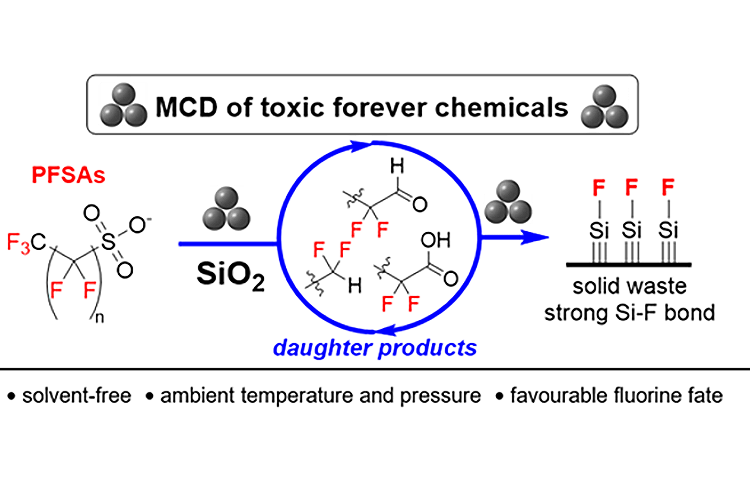
In a detailed study, Gobindlal et al. (2022) [10] investigated the mechanochemical destruction (MCD) of perfluorosulfonic acids (PFSAs), a subclass of persistent per- and polyfluoroalkyl substances (PFASs), using the PM 100.
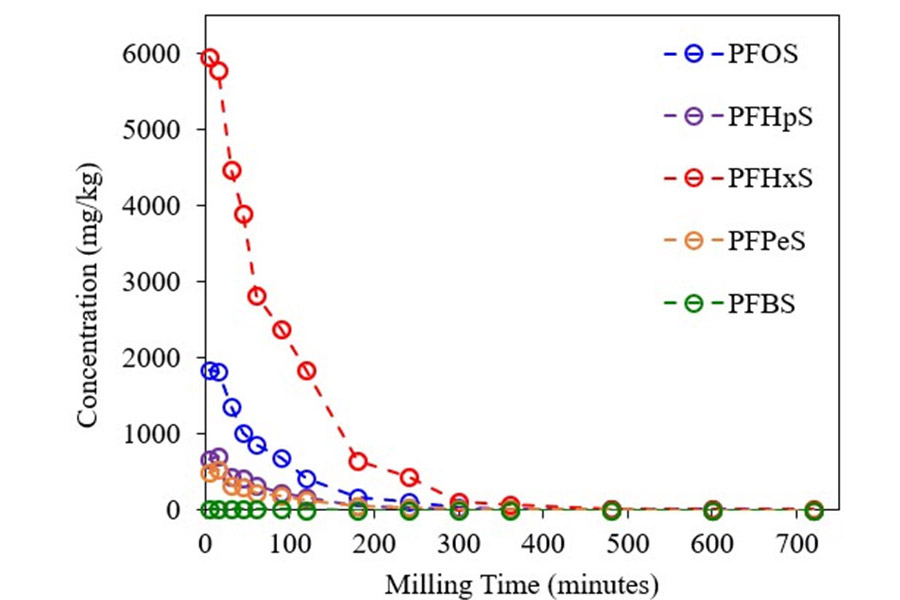
- Milling Setup: 0.05 g of PFAS standards were mixed with 5 g of quartz sand in a 50 ml stainless steel jar with ten 10 mm stainless steel balls.
- 研磨在常温常压下进行,无需溶剂或化学添加剂。样品在相对温和的条件下研磨长达720分钟,以评估降解动力学并确定其基础降解机制。
- PM 100在720分钟内实现了总全氟烷基物质(PFSA)含量99.99%的降解。其中PFOS、PFHpS、PFHxS、PFPeS和PFBS等单一化合物呈现快速降解趋势,PFBS在180分钟内即实现完全降解。
Mechanism of Action:
石英砂在PM 100行星式球磨仪中研磨时,会产生引发PFAS分解的活性表面自由基。这些自由基促进了有机化学中最强键之一——C-F键的断裂,促使氟元素矿化为稳定的Si-F键。该研究团队的另一项研究表明,采用Retsch PM 100行星式球磨仪进行的机械化学分解技术,在修复PFAS污染土地及销毁库存泡沫灭火剂方面具有可扩展性和高效性。
通过机械化学实现生物质的功能化以应用于制药领域
机械化学正改变着功能性生物材料的制备方式,阳离子纤维素便是典型例证。该工艺采用无溶剂流程:将棉纤维与催化碱及极少量添加剂混合,再通过MM 400与阳离子试剂共同研磨以激活反应。这种固态处理方式省去了水和体积溶剂的使用,与传统方法相比大幅降低了化学品消耗和废弃物产生。研磨后经短暂老化处理完成反应,最终获得具有卓越性能的高电荷纤维素纤维。 [14]
最佳反应条件:棉纤维在50毫升不锈钢研钵中加入3×10毫米钢珠,以25赫兹研磨5分钟,随后加入EPTMAC,继续研磨30分钟。随后将反应混合物在50℃条件下老化24小时,经索氏提取(48小时)及冷冻干燥处理后,成功分离出纯净的cCF材料。
这对制药业为何如此振奋人心?
这些阳离子纤维对病毒具有强烈的静电结合力,能够高效去除水体和工艺流中的病原体——这对无菌生产和净水应用至关重要。除过滤功能外,该材料在药物递送、抗菌表面及生物加工助剂领域也展现出巨大潜力。该工艺实现了卓越的可持续性指标,符合绿色化学原则和行业目标,同时可精确调控电荷密度以实现定制化性能。
这项创新彰显了机械化学如何为制药生产提供高价值、环保的解决方案——通过单一突破性方法实现安全性、效率与可持续性的完美融合。
温度对机械化学的影响
在机械化学中,温度对反应效率有重大影响,甚至可以决定反应类型。尽管冷却对反应结果也有影响,但人们对加热碾磨机以体现 "拍打和加热 "概念的兴趣与日俱增。在某些情况下,温度可能没有明显的影响。下图说明了 RETSCH 球磨机的温度范围。以下示例说明了温度对化学反应的潜在影响。
冷却可稳定机械化学的中间产物(衍生物
涉及热不稳定中间产物的反应可以通过在合成的同时进行冷却来精确控制,例如,在 MM 500 控制装置中,外部冷却器设置为 -5°C,冷却剂主动冷却热板,从而冷却罐和样品。这一过程可稳定热不稳定的中间产物,最终提高产量。MM 500 控制器的温度管理功能可实现全新的反应,从 2-甲基咪唑鎓和氧化锌合成 ZIF-8 就证明了这一点。
MM 500 控制器可通过使用不同的温度水平精确控制机械化学过程中的产品形成。此外,通过与低温恒温器或 CryoPad 相连接,反应可在低至 -100°C 的其他温度范围内保持稳定,从而极大地拓展了发现新合成途径和产品的潜力。CryoPad 实现了精确的温度控制,可以在 0°C 至 -100°C 之间选择和调节热板上的温度。
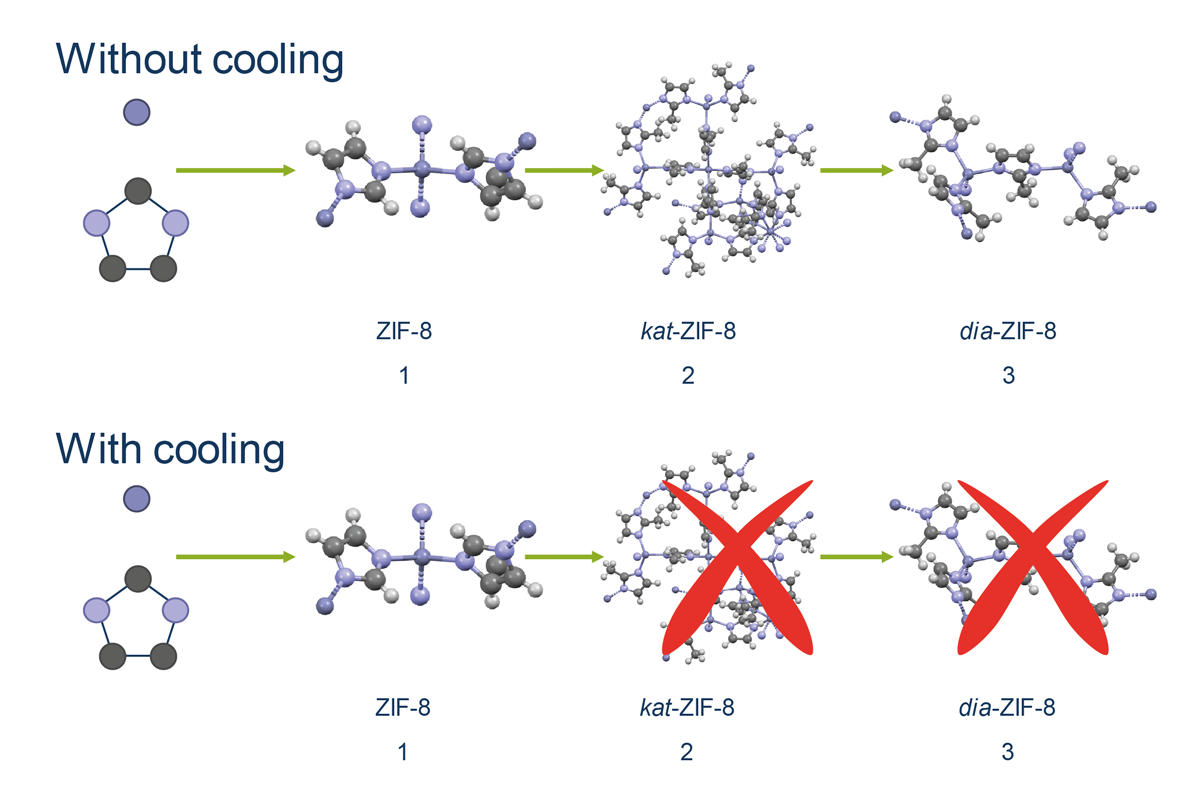
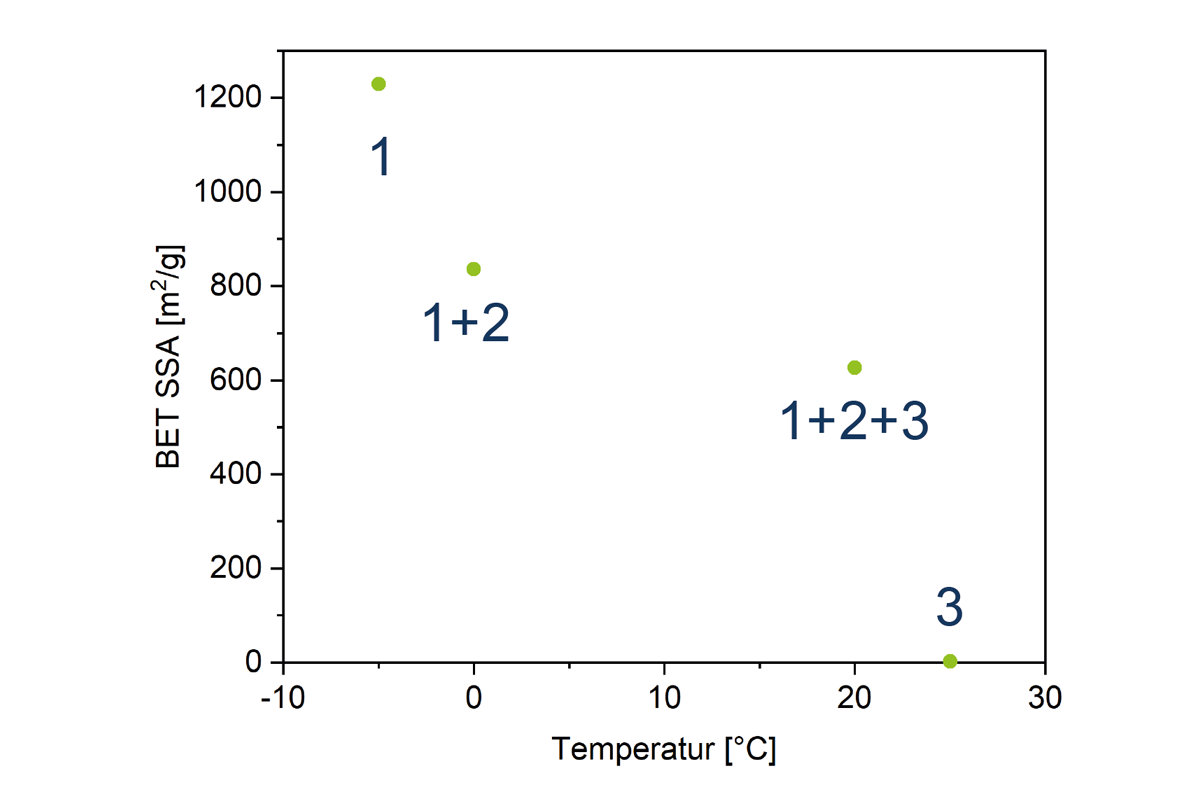
通过冷却装置将热交换工作平台温度设定为-5 °C后,即可立即终止kat-ZIF-8与dia-ZIF-8的后续反应。即使温度升高5 °C,仍会形成第二中间体kat-ZIF-8。当热交换工作平台温度为20℃时,可检测到全部三种产物;若不冷却进行合成,实际反应仅生成dia-ZIF-8。该结果由Lars Borchardt研究组发表。[3]
在机械化学中,加热会带来不同的结果或更快的反应和更高的产量
在机械化学中,通过热能输入的能量也有利于反应,并能带来更好的产量或不同的反应类型。在铃木宫浦交叉偶联反应等反应途径中,较高的温度会加速反应,这与使用本生灯的经典化学反应类似。[
MM500控制器的加热方式更加可控,它可以连接到低温恒温器。该装置使用导热液体将导热板加热至 100°C,从而有效地将热量传递到研磨罐,促进反应的进行。
图中展示了机械化学反应中的一个加热实例,涉及伯胺与邻苯二甲酸酐的反应。在室温下使用 MM 500 vario 或 MM 500 control 只能得到单酰胺。与此相反,在 80°C 下研磨三小时,可生成所需的亚胺,分离产率约为 75%。
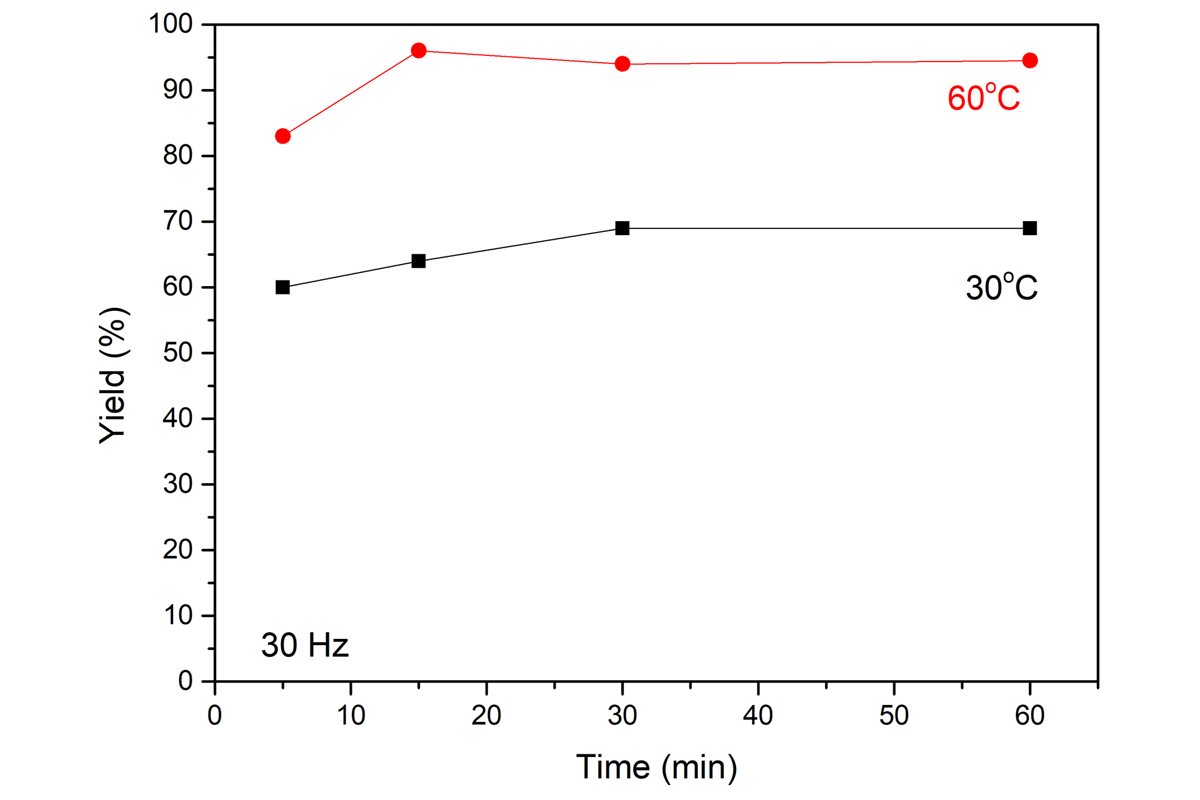
另一个说明温度如何影响球磨机中机械化学反应产量的例子是在 MM 500 控制装置中合成金属有机化合物。在 30°C 温度条件下,30 分钟后可获得约 70% 的最高产量,延长研磨时间也不会提高产量。然而,当使用恒温器将温度保持在 60°C 时,仅在 15 分钟内就几乎完成了反应。
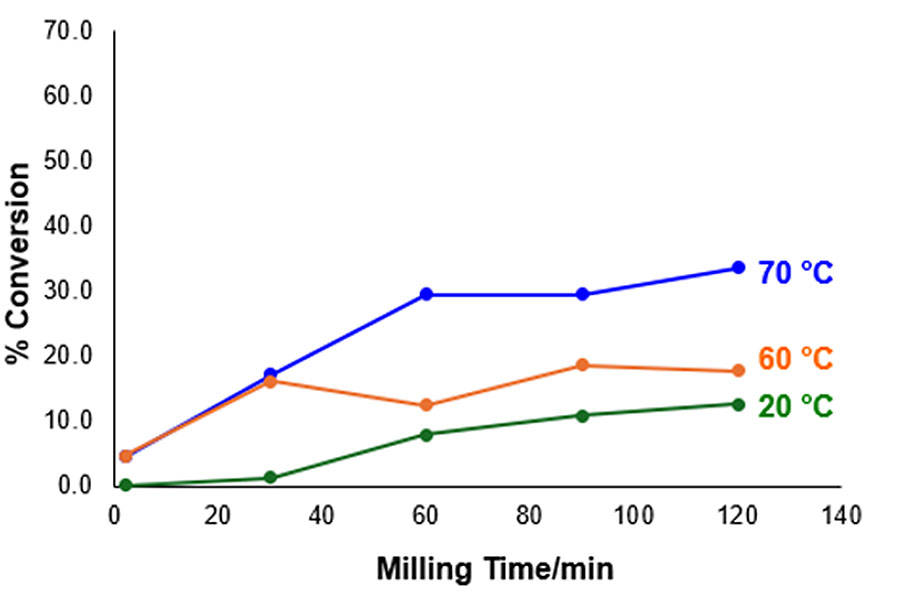
第二个例子展示了在MM 500control中进行有机反应时的转化率。仅对反应物进行研磨而不加热时,2小时后收率仅为10%。然而,在70℃下加热可使收率提升至35%。通过优化规模、研磨速度等参数还能进一步提高收率,但加热对实现良好收率至关重要。
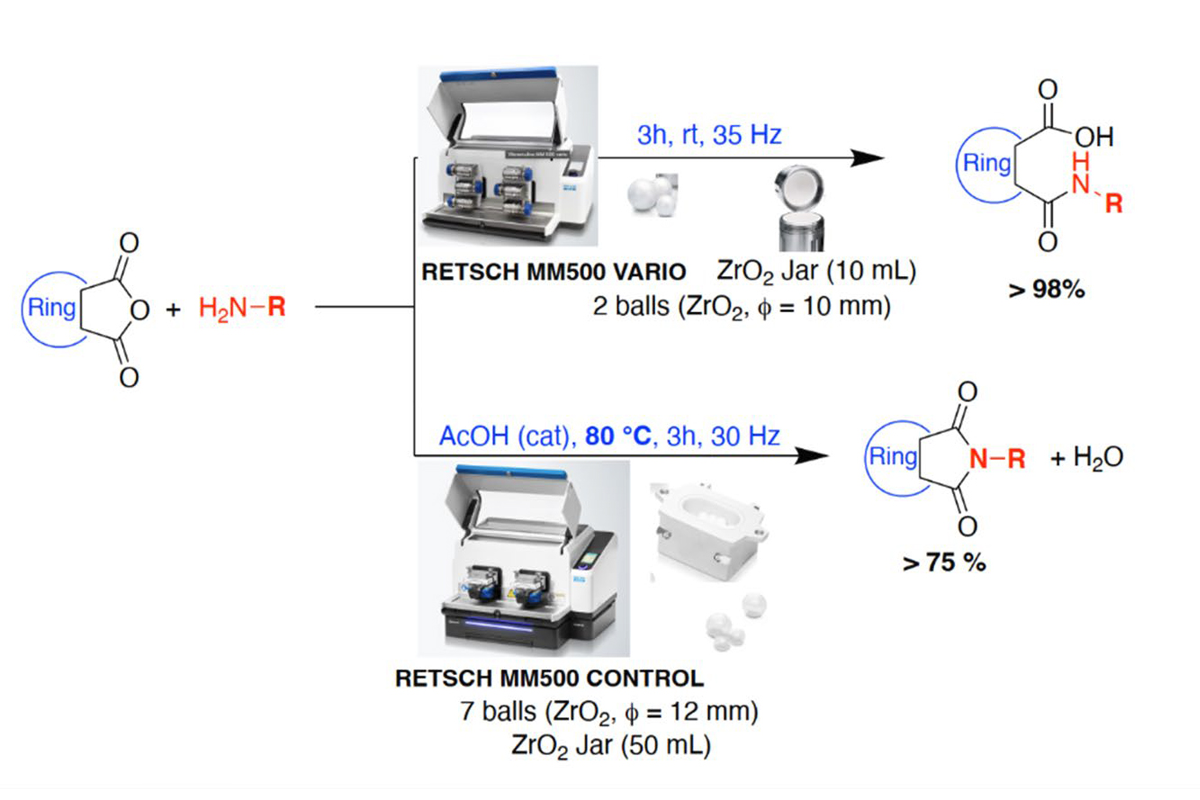
温度可以决定球磨机中反应的类型,如本例所示。通过调节温度水平,可以精确控制反应,并获得不同的产品。[4] ;
测量系统 GrindControl GrindControl shows what’s happening inside the grinding jar – in real time
GrindControl provides real-time visibility into processes inside the grinding jar. Pressure and temperature are continuously monitored—ensuring safe, precise control, even with sensitive or reactive materials. Respond promptly to unexpected pressure spikes, and keep a close eye on temperature-sensitive samples and even mechanochemical reactions at all times.
GrindControl at a glance
- Real-time data on pressure & temperature
- Early detection of critical conditions
- Precise process control
- Protection of sensitive materials
- Reproducible results
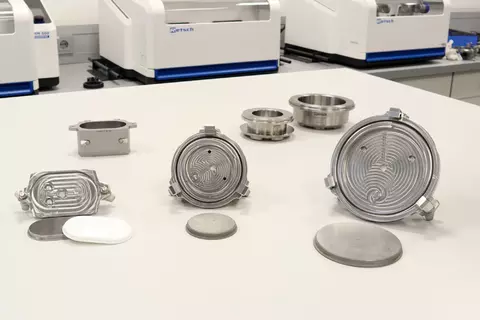
样品量小,样品通量大,可用于筛选目的
在机械化学、制药或一般研发领域,由于材料成本高或供应有限,测试反应通常需要少量样品。因此,使用小型研磨罐是非常有益的。不锈钢混合研磨机的最小研磨罐容量为 1.5 或 2 毫升,5 毫升或 10 毫升的研磨罐更为常用。对于需要氧化锆或碳化钨研磨罐的应用,最小的可用尺寸为 10 毫升。为了满足所有要求,RETSCH 提供了全面的适配器和多腔罐选择:
- MM 400、MM 500 vario 和 CryoMill 均配有可容纳 4 x 5 ml 不锈钢研磨罐的适配器,可同时处理 8、24 或 4 个样品。
- 2 ml 不锈钢管可与 MM 400(20 个样品)、MM 500 vario(50 个样品)或 CryoMill(6 个样品)的适配器配合使用。
- 这些 2 毫升试管还可与 MM 500 nano 或 MM 500 control 中的另一种适配器配合使用,每批可容纳 18 个样品。
- 不锈钢管在低温应用中尤为有利,因为它们不会像塑料管那样破裂。
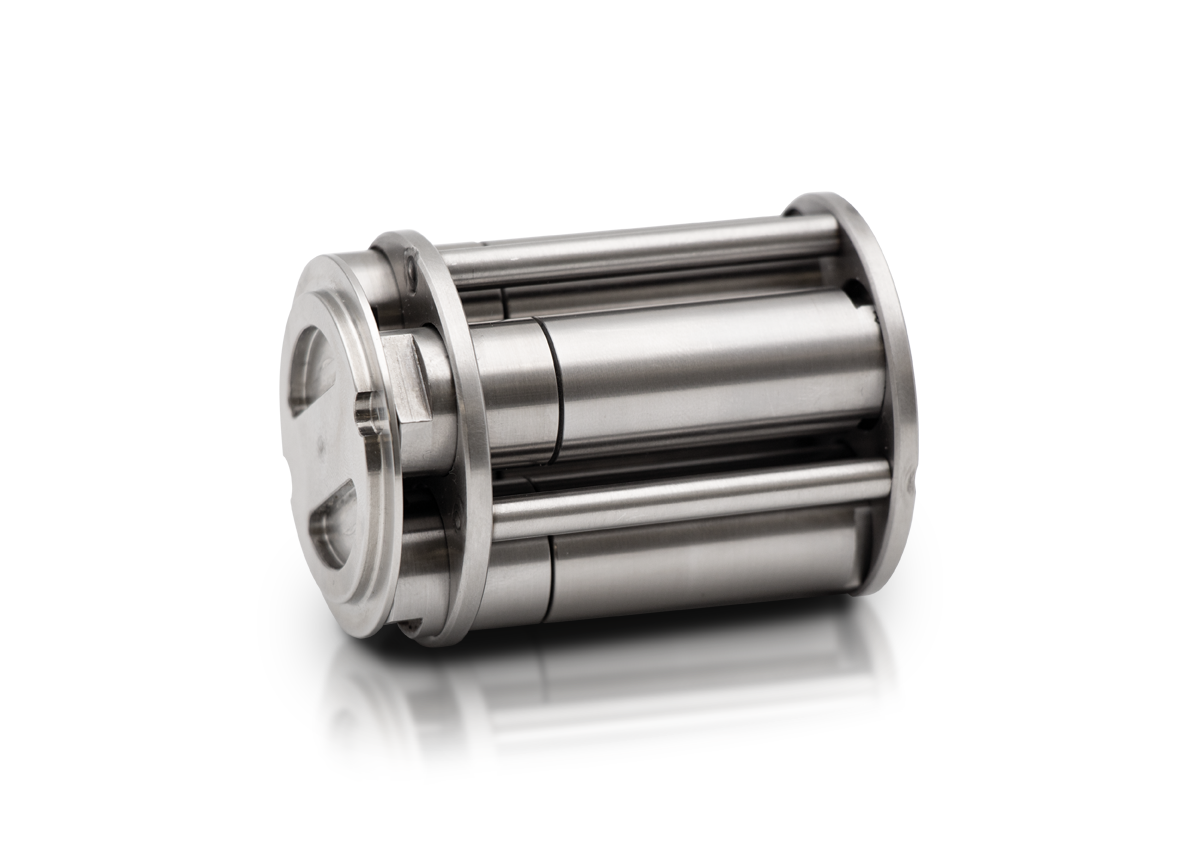
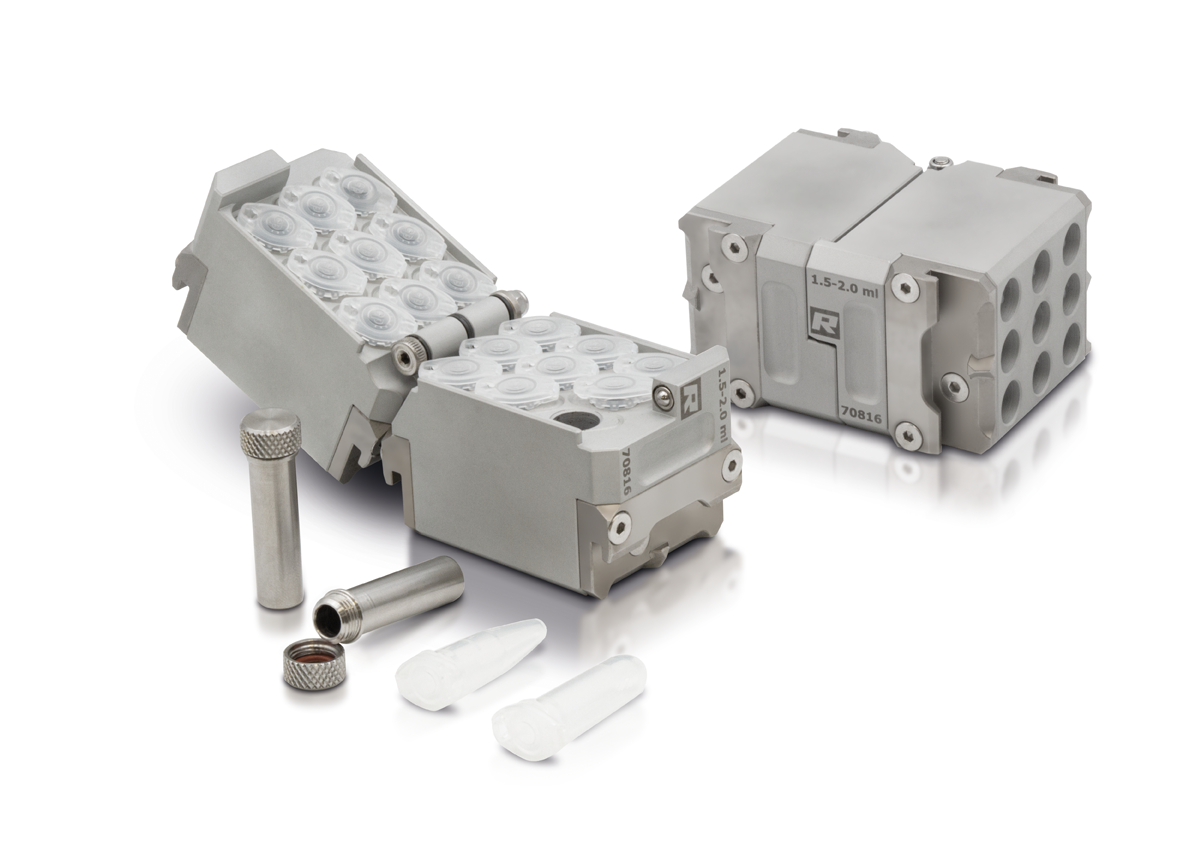
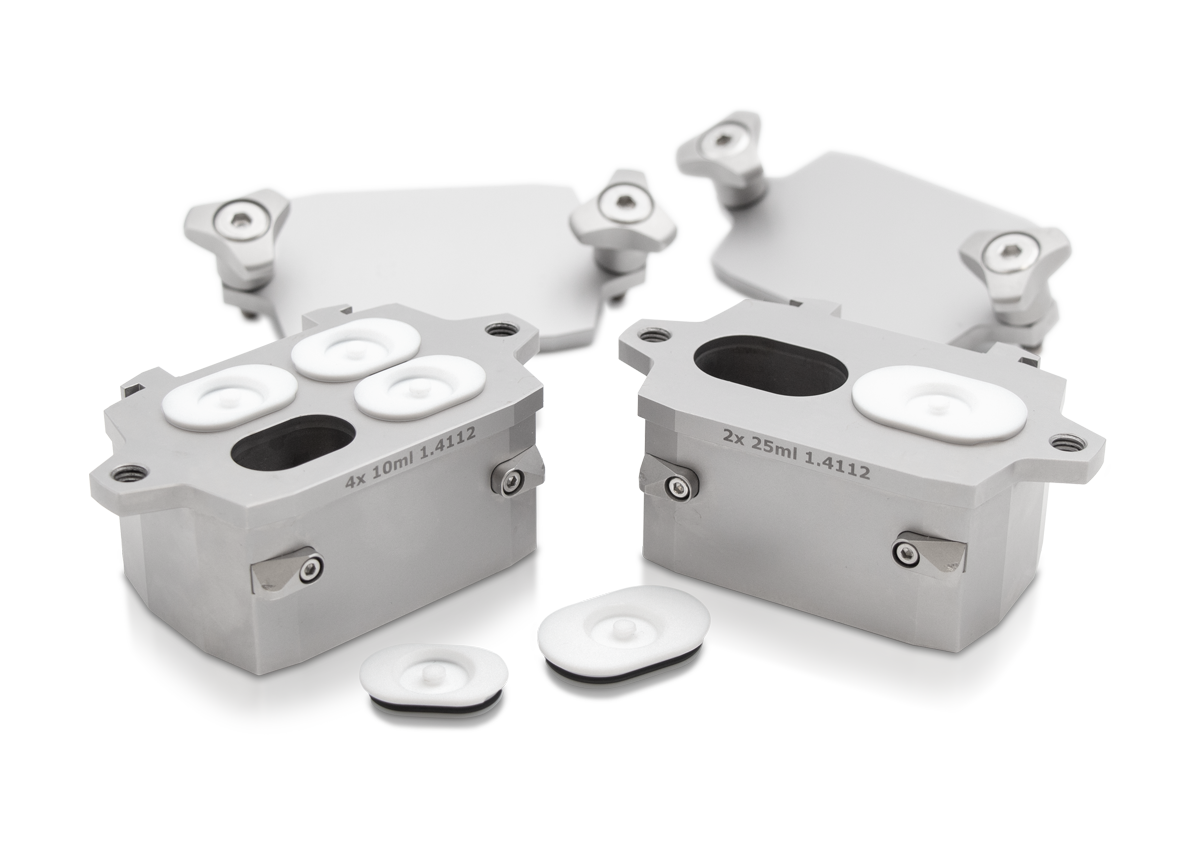
此外,MM 500 control 和 MM 500 nano 还可容纳 2 x 25 ml 或 4 x 10 ml 多腔研磨罐,其研磨效果可与 MM 400 中使用 10 ml 或 25 ml 研磨罐时的效果相媲美。在行星式球磨仪中,可以使用 12 毫升或 25 毫升不锈钢研磨罐,甚至可以叠加使用,使样品量增加一倍。此外,还提供适用于机械化学应用的 1.5 毫升玻璃瓶适配器--更多详情,请参阅下一节。
Successful Mechanochemical Synthesis of Bütschliite from Carbonates
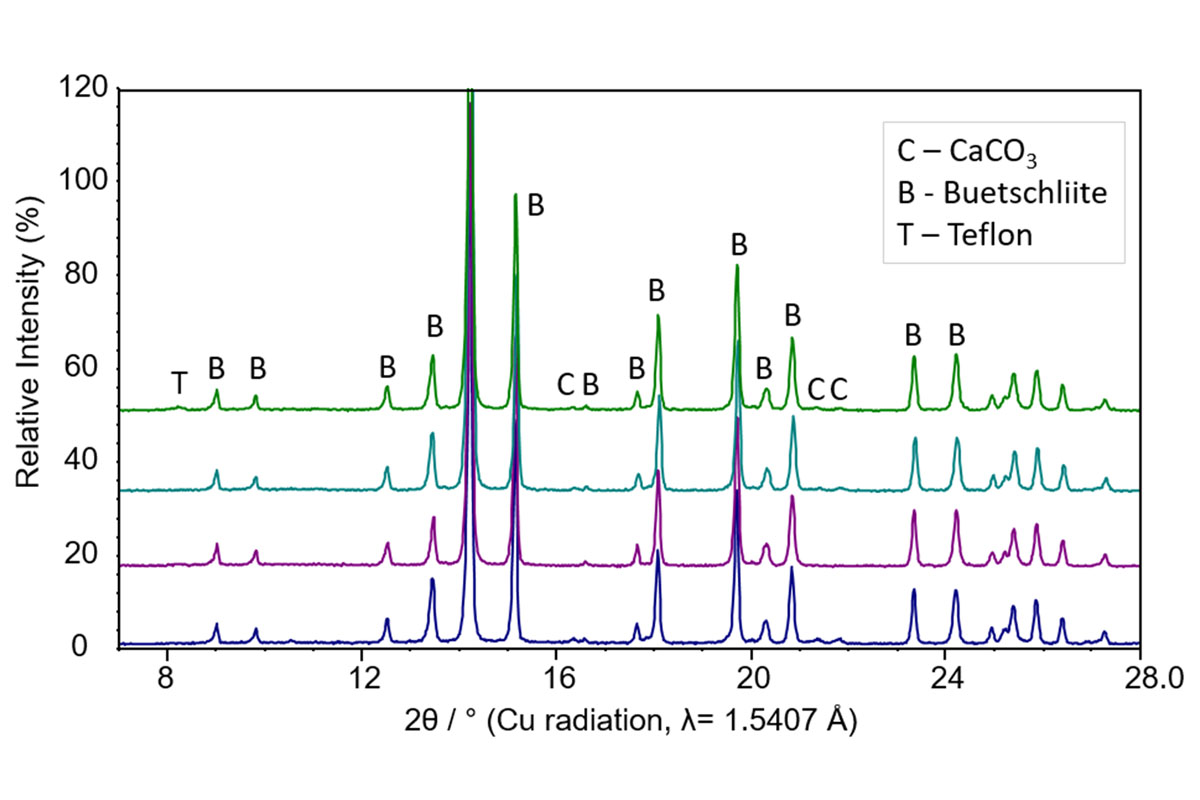
A 将K₂CO₃与CaCO₃按1:1摩尔比(总质量0.5克)置于5毫升研磨罐中,以30Hz频率研磨2小时。每罐使用3×7毫米钢球,对应球料比为8.4:1。在4个研磨罐中均成功且可重复地生成布氏石K₂Ca(CO₃)₂。该结果由Claudia Weidenthaler研究组发表。[8]
高效、可持续的共晶体合成解决方案
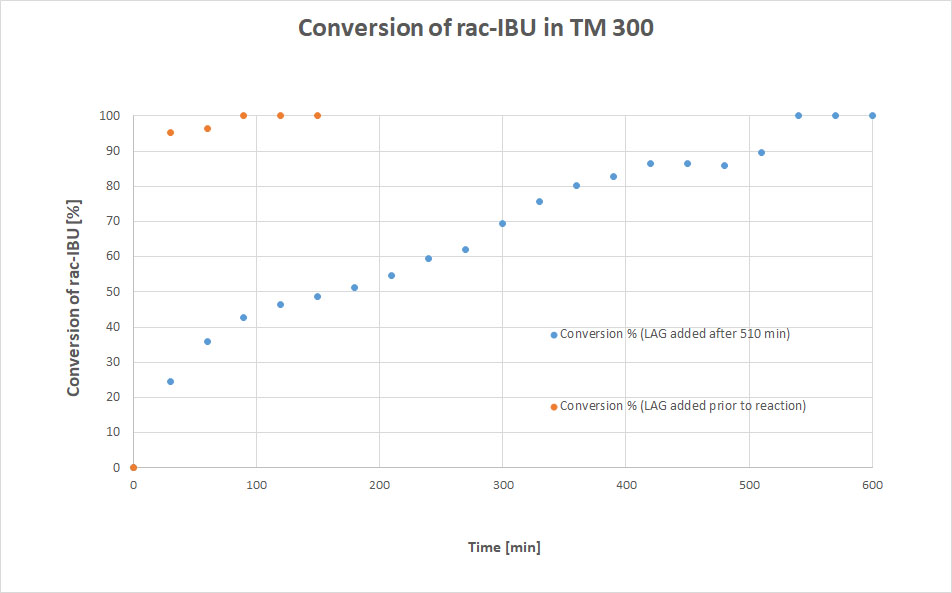
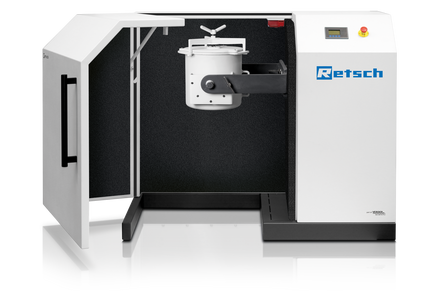
TM 300 能够满足现代制药生产的要求。以机械化学合成 rac-Ibuprofen:Nicotinamide 共晶体为例,就可以证明这一点。TM 300 是传统溶液法的环保替代品。在 LAG 工艺中只使用了极少量的乙醇,仅用 90 分钟就生产出了 3.2 公斤的共晶体,收率高达 99%。
图中显示的是 rac-IBU 的转化。蓝图:270 分钟后加入 10 千克球(d = 10 毫米)和 360 分钟后加入 10 千克球(d = 30 毫米)的纯研磨方法;510 分钟后加入 LAG 添加剂 EtOH。橙色图:
迈克尔-费尔德霍夫研究小组展示的结果[6]。
TM 300 能够以公斤为单位进行机械化学处理,为可持续的工业制造工艺开辟了新的可能性。特别有趣的是金属磨损极小--测量值远远低于相关水平,明显低于偏心振动磨等。下表列出了 TM 300 在测试过程中的最小磨损值。
| 样品 | 铝[ppm] | 铬 [ppm] | Co [ppm] | 铁[ppm] | 镍 [ppm](百万分之一 |
|---|---|---|---|---|---|
| 原料 IBU | 11.3 | 39.0 | 25.7 | 71.9 | 34.9 |
| 尼古丁胺原料 | 8.9 | 33.3 | 26.7 | 40.0 | 33.3 |
| 30 分钟后的共晶体 | 10.8 | 35.9 | 30.8 | 51.3 | 38.5 |
| 60 分钟后 | 11.0 | 37.0 | 31.7 | 63.4 | 39.6 |
| 90 分钟后 | 17.2 | 43.8 | 35.9 | 64.6 | 45.3 |
迈克尔-费尔德霍夫(Michael Felderhoff)研究小组提交的成果[6]
设置:
- 2,03 公斤种族 IBU;1,20 公斤 NIC
- 10 升湿研磨桶,20 千克 10 毫米不锈钢研磨球
- LAG 乙醇 0.1 毫升/克
- 60 转/分,90 分钟
- 99 % 收率
共晶体筛选
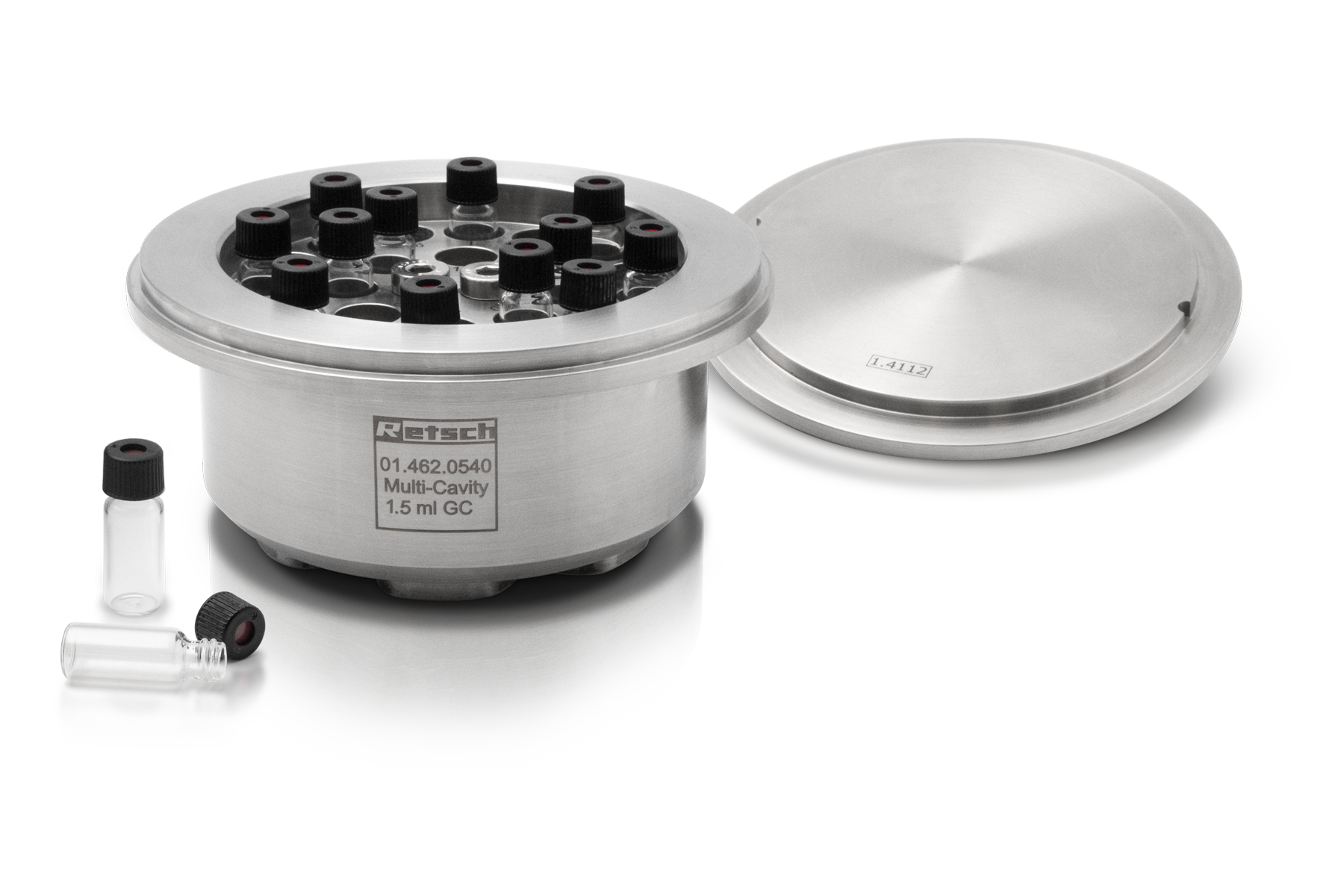
有了特殊的适配器,就可以在行星球磨仪中使用一次性样品瓶(如 1.5 毫升 GC 玻璃瓶)进行共晶体筛选。适配器有 24 个位置,外环有 16 个位置,内环有 8 个位置。外圈最多可容纳 16 个样品瓶,使用行星式球磨仪 PM 400 时,最多可同时筛选 64 个样品。内环的 8 个位置适用于不同能量输入的试验,例如机械合成研究。
该适配器与 PM 100、PM 300 和 PM 400 型号兼容。

The video shows use of Planetary Ball Mills for co-crystal screening.
Co-crystallization
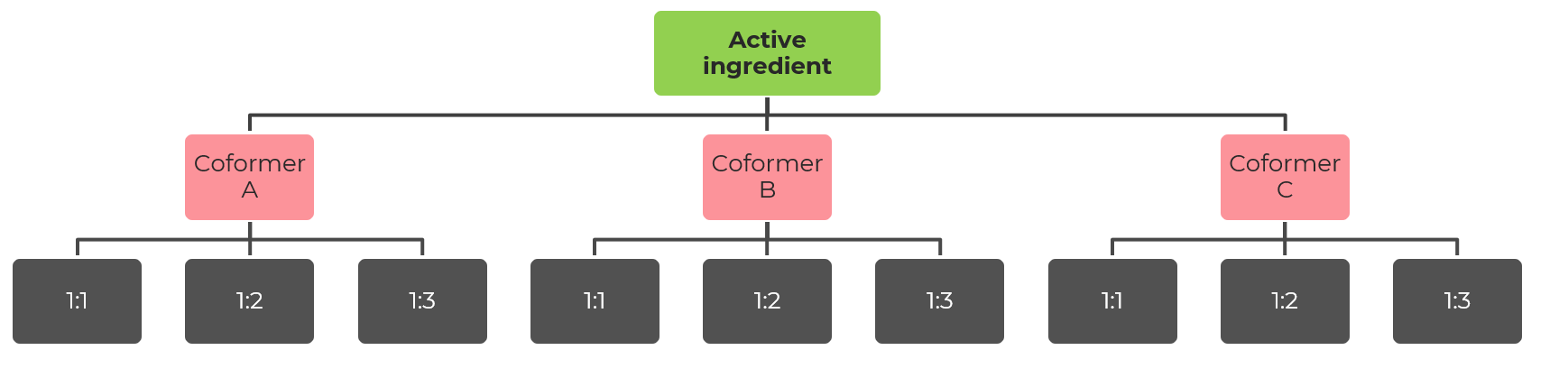
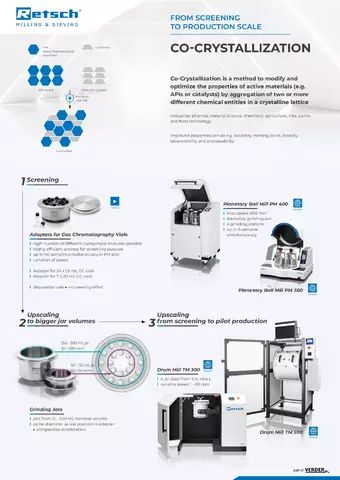
Co-Crystallization is a method to modify and optimize the properties of active materials (e.g. APIs or catalysts) by aggregation of two or more different chemical entities in a crystalline lattice.
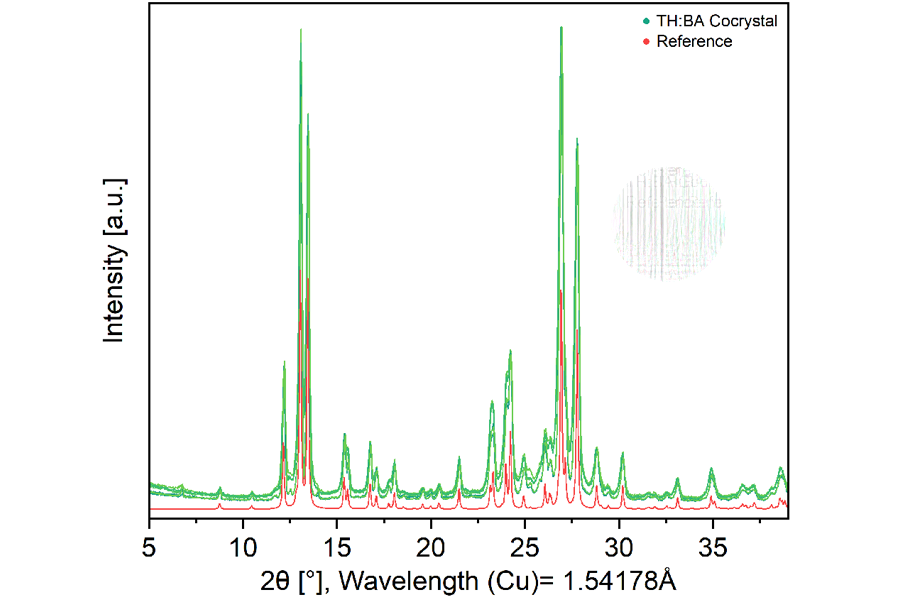
MM 400 共晶筛选
- 60 分钟研磨时间
- 30 Hz 频率
- 每个离心管配一个6 mm 不锈钢球
- 四个无溶剂实验和四个含20微升乙醇的实验
MM 400:可用于原位 RAMAN 光谱分析和光诱导反应
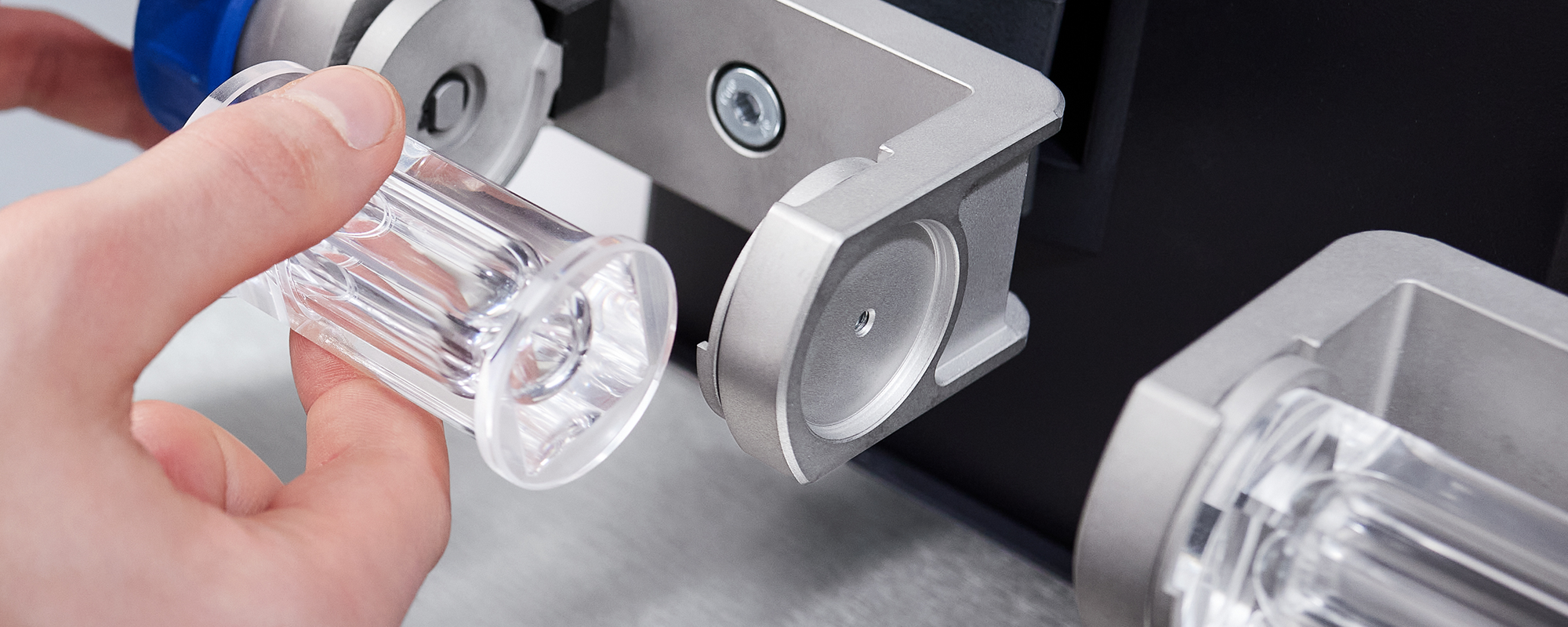
MM 400 的一项新功能是针对机械化学应用而开发的:透明研磨罐是 RAMAN 原位光谱仪的基础,可以观察到罐内发生的化学反应。最佳方法是将 RAMAN 光谱仪置于研磨罐下方。只要拧松三颗螺丝,就可以轻松取下研磨罐下方的盖子。机器底板上有两个开口,RAMAN 光谱仪通过这两个开口指向研磨罐的底部。由于采用了这种特殊装置,MM 400 可以完美地用于机械化学用途。由于其透明度,PMMA 研磨罐也适用于进行光机械化学反应。
机械化学反应的升级
混合研磨机是进行机械化学测试和试验的重要工具。然而,由于研磨罐的最大尺寸为 125 毫升,其升级能力受到限制。合理的做法是使用行星式球磨仪,每批次最多可容纳 4 x 500 毫升的研磨罐。
为了进一步扩大规模,RETSCH 推出了鼓式研磨机 TM 300 和 TM 500,它们配备了最大容量为 150 升的研磨桶。鼓式研磨机的运行机制与混合研磨机和行星式球磨机不同,由于转速较慢,因此能量输入通常较低。初步的放大试验显示了良好的效果。
鼓式研磨机 - 大容量精细研磨
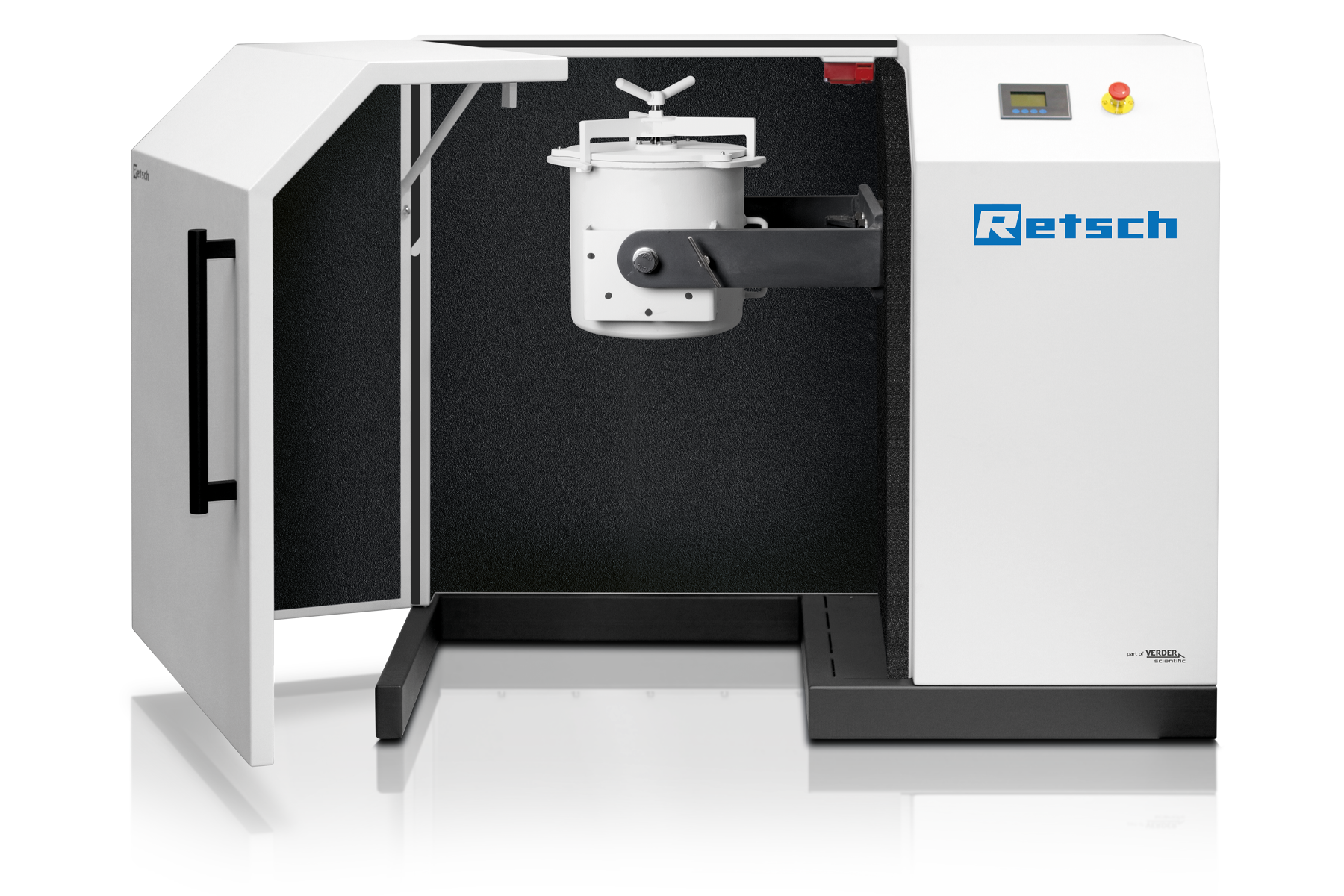
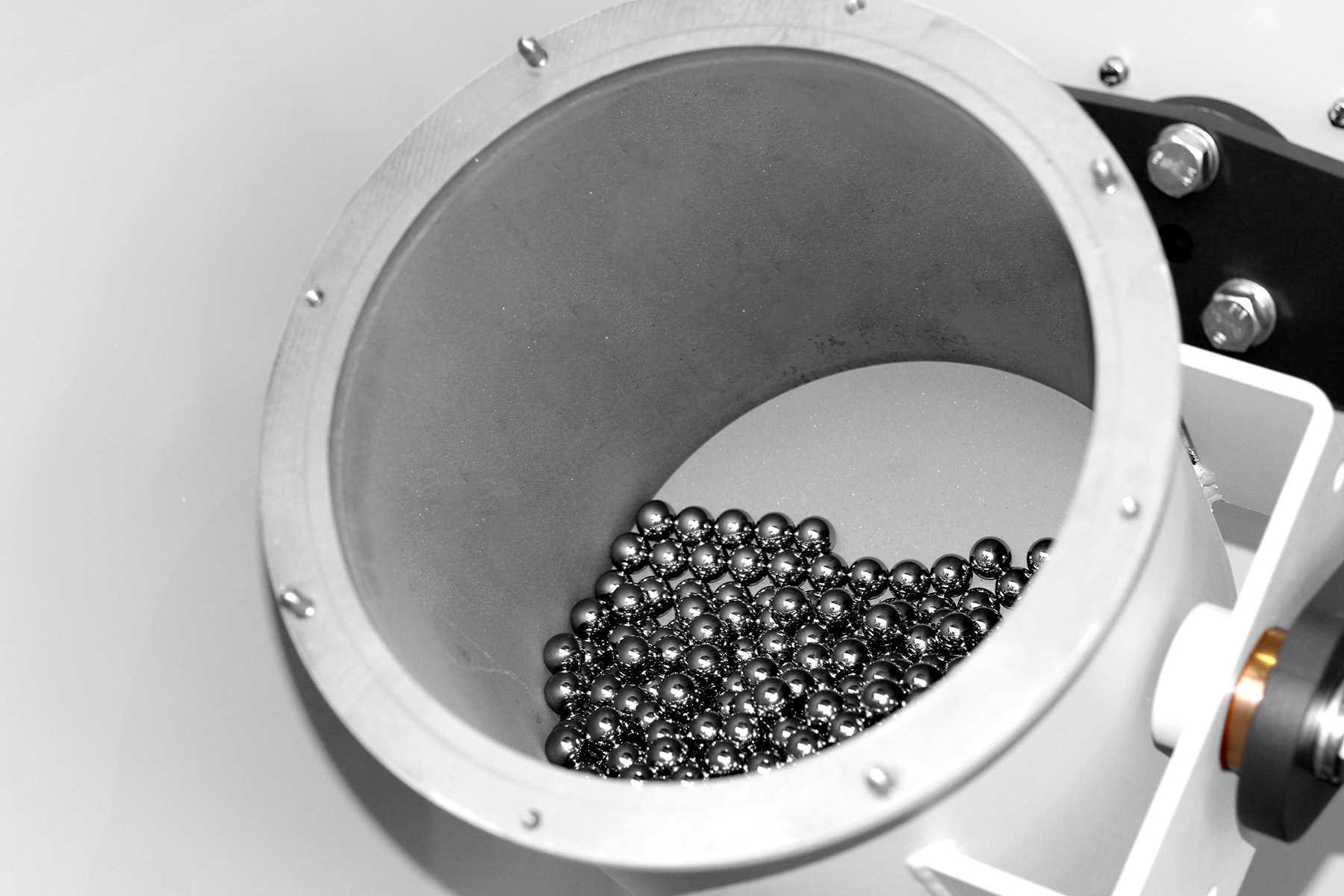
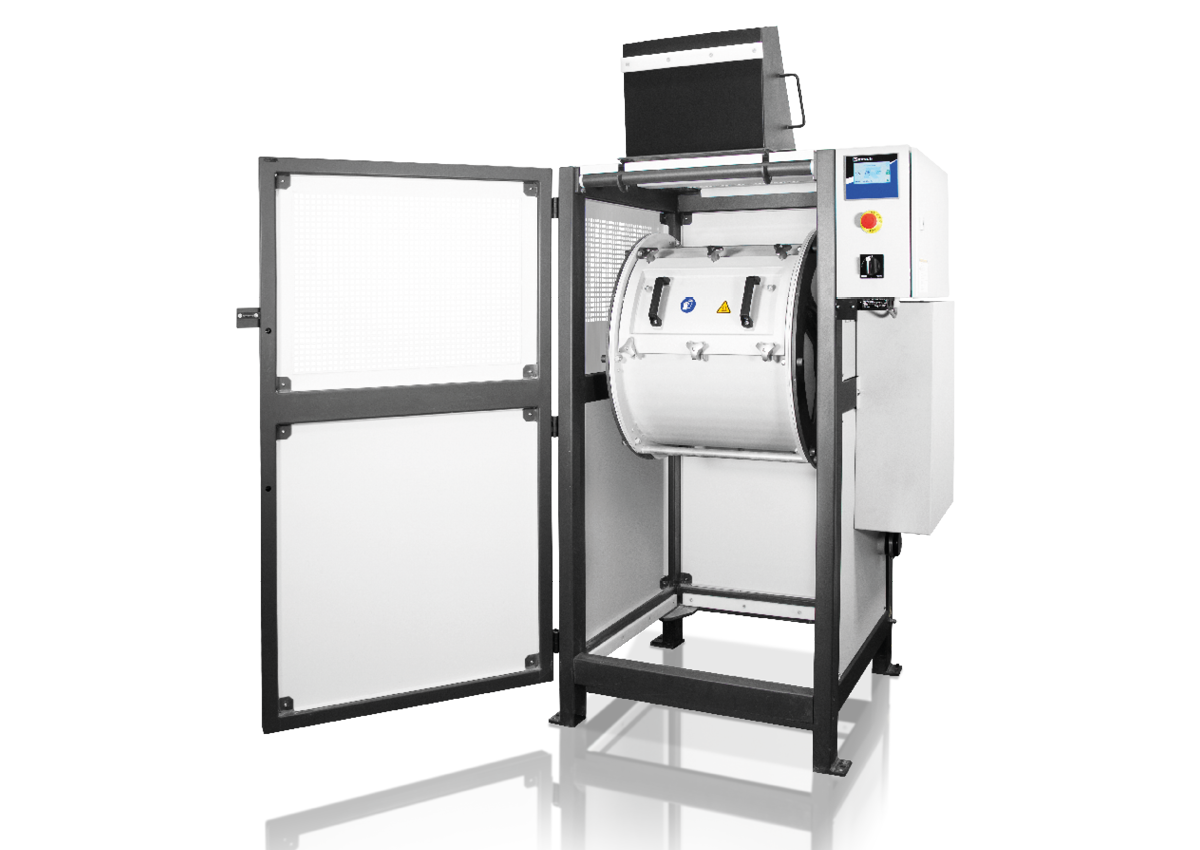
当 TM 300 转鼓旋转时,摩擦力会使研磨球上升到转鼓壁上。这一距离随着转鼓速度的增加而增加,直到离心力超过重力,使磨球在整个旋转过程中紧贴鼓壁。此速度称为临界速度 = NC。
NC = 42.3/{√(D-d)} [每分钟转速]
D = 转鼓内径 [m] = 0.3 m(TM 300 [rpm] 时
d = 球径 [m]
临界转速约为每分钟 80 转,但根据钢球直径的不同而有所变化。
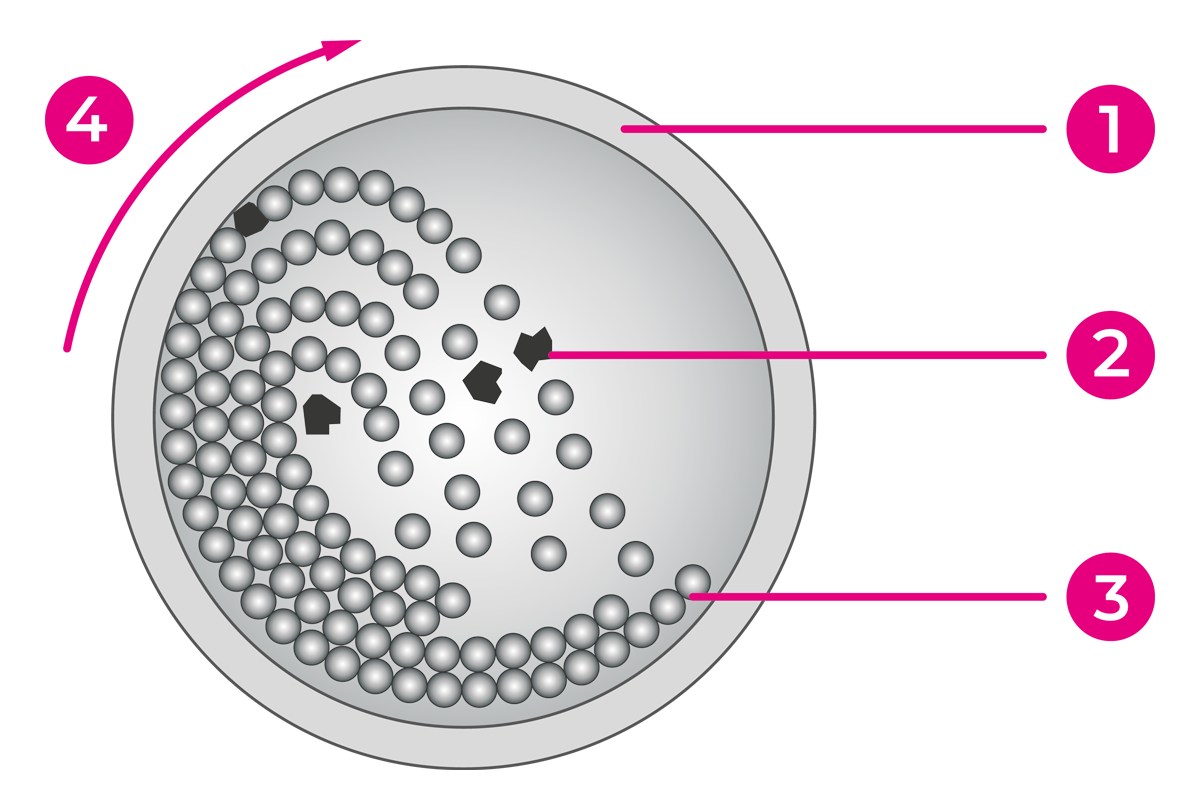
2.样品
3.研磨球
4.旋转方向.
TM 300 有两种不同的工作模式:白内障和级联。在白内障模式下,设备的运行速度约为临界速度的 70%,相当于 TM 300 的 55-60 rpm。这种速度可使滚珠沿着滚筒壁大幅移动。虽然没有达到临界速度,但钢球最终会脱离滚筒壁,越过滚筒中心,撞击滚筒底部的样品。
在级联模式下,以大约 50 rpm(低于临界速度的 70%)的速度启动时,滚珠在鼓壁上的上升速度较低。在脱离时,它们倾向于向下滚动,而不是飞过滚筒中心,从而产生摩擦而不是撞击。
研磨罐的填充量 机械化学应用
在机械化学领域,特别是使用行星式球磨机时,由于经常需要高加速度和偶尔缺少样品材料(导管),球填充的方法偏离了传统的三分之一规则(1/3 球,1/3 样品,1/3 空位)。重点转向使用特定的质量比,这就需要考虑反应物的数量并明确决定使用的质量比。
一旦确定了球的数量,所需的研磨罐尺寸也就显而易见了。由于罐中的样品量通常很少,因此与遵守传统的三分之一规则相比,损坏研磨球和研磨罐的风险更高。
常用的质量比(w/w)为 1:10,但也可以是 1:5 或 1:15。这就意味着,如果使用 15 克的原料,则需要 150 克的小球。
- 150 克 = 20 x 10 毫米碳化钨球,每个 7.75 克。
- 对于 20 x 10 毫米的球,至少需要 50 毫升的罐容量,最好是 80 毫升(参见行星式球磨仪产品页面上的推荐罐容量)。
- 150 克 = 5 x 15 毫米碳化钨球,每个 26.2 克,需要至少 125 毫升的罐子容积。
- 150 克 = 11 x 15 毫米不锈钢球,每个 13.9 克,要求罐子最小容积为 125 毫升。
| 研磨罐 公称容积 |
样品数量 | 最大进样尺寸 | Ø 5 mm* | Ø 7 mm* | Ø 10 mm* | Ø 15 mm* | Ø 20 mm* | Ø 30 mm* |
|---|---|---|---|---|---|---|---|---|
| 12 ml | 直至 ≤ 5 ml | < 1 mm | 50 | 15 | 5 | - | - | - |
| 25 ml | 直至 ≤ 10 ml | < 1 mm | 95 – 100 | 25 – 30 | 10 | - | - | - |
| 50 ml | 5 – 20 ml | < 3 mm | 200 | 50 – 70 | 20 | 7 | 3 – 4 | - |
| 80 ml | 10 – 35 ml | < 4 mm | 250 – 330 | 70 – 120 | 30 – 40 | 12 | 5 | - |
| 125 ml | 15 – 50 ml | < 4 mm | 500 | 110 – 180 | 50 – 60 | 18 | 7 | - |
| 250 ml | 25 – 120 ml | < 6 mm | 1100 – 1200 | 220 – 350 | 100 – 120 | 35 – 45 | 15 | 5 |
| 500 ml | 75 – 220 ml | < 10 mm | 2000 | 440 – 700 | 200 – 230 | 70 | 25 | 8 |
*建议装球量(颗)
下表列出了与研磨罐容积、样品量和最大进料粒度相关的不同尺寸研磨球的建议装料量(以个为单位)。
使用混合研磨机的机械催化
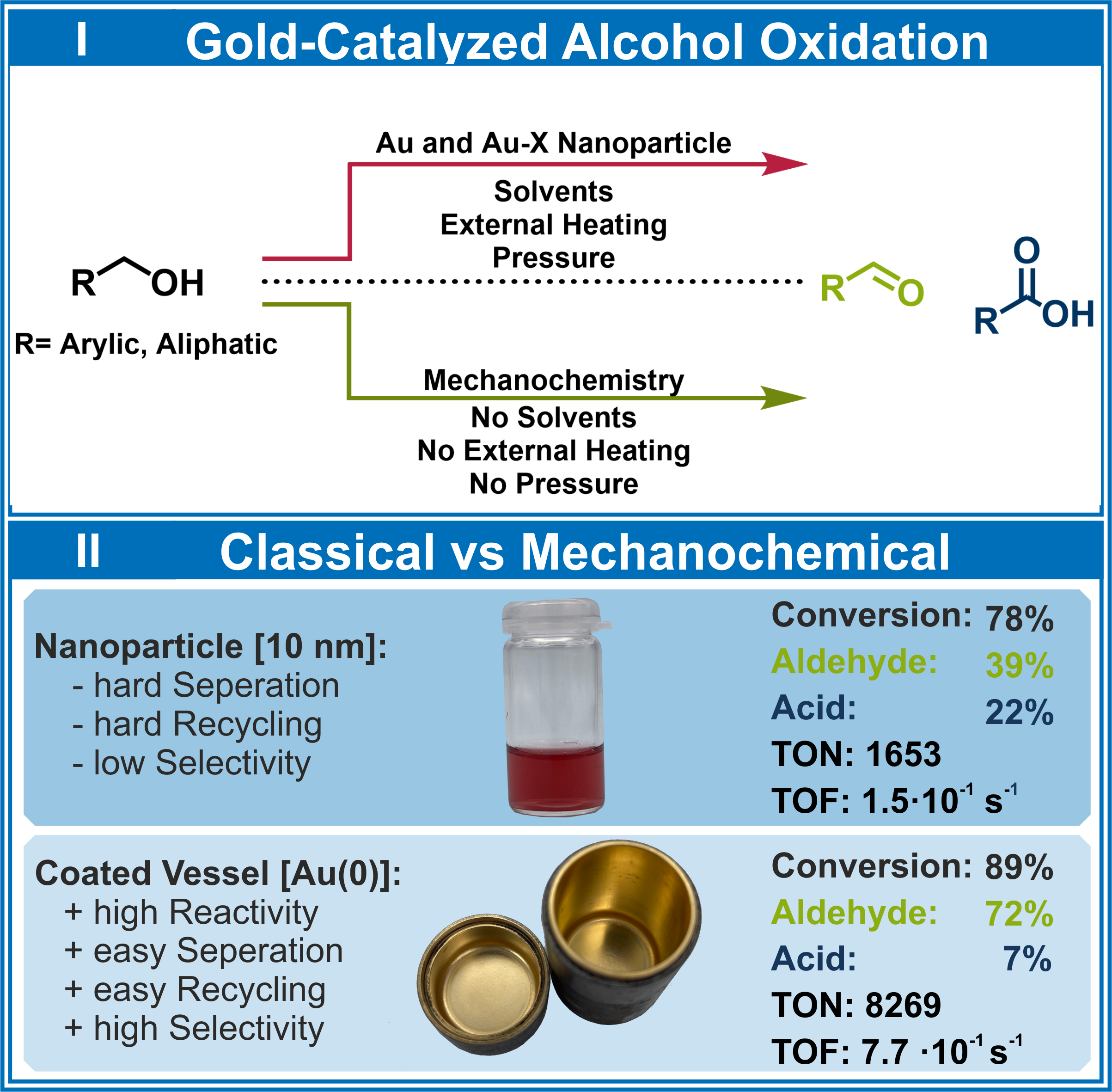
醛是化学工业中的基本化合物,是生产药品、维生素和香料不可或缺的原料。如何有选择性地将醇氧化成醛,同时又不产生羧酸和酯类等不需要的副产品,是一个难题。许多传统方法会导致过度氧化,并需要使用溶剂和对环境有害的化学品,这不仅会产生有害废物,还会对使用者的健康造成严重威胁。
波鸿鲁尔大学已经展示了醇类到醛类的机械催化转化,并发表了相关成果[7]。在 MM 500 vario 研磨器中,在 35 Hz 的频率下,3 小时内就能在 25 ml 研磨罐的金涂层表面发生反应。研磨罐的金层只有 1 纳米厚,可以多次重复使用。这种催化反应直接在球磨机中进行,不使用有害溶剂,条件温和,保持了基质的完整性。与传统方法相比,机械催化法的醛产率更高,生成的副产物更少。与 30 赫兹相比,35 赫兹的产率更高。
原位监测机械化学合成反应 (MSR)
通过监测压力和温度这两个变量,可以获得有关研磨罐内部情况的宝贵信息。RETSCH 的 GrindControl 系统可用于控制胶体或长期研磨过程,或成功进行材料合成,如机械合金化或其他机械化学过程。GrindControl 系统可用于行星式球磨机 PM 100、PM 300 和 PM 400、混合磨 MM 500 nano 和 MM 500 control 以及高能球磨机 Emax。它包括压力和温度测量硬件以及分析软件。
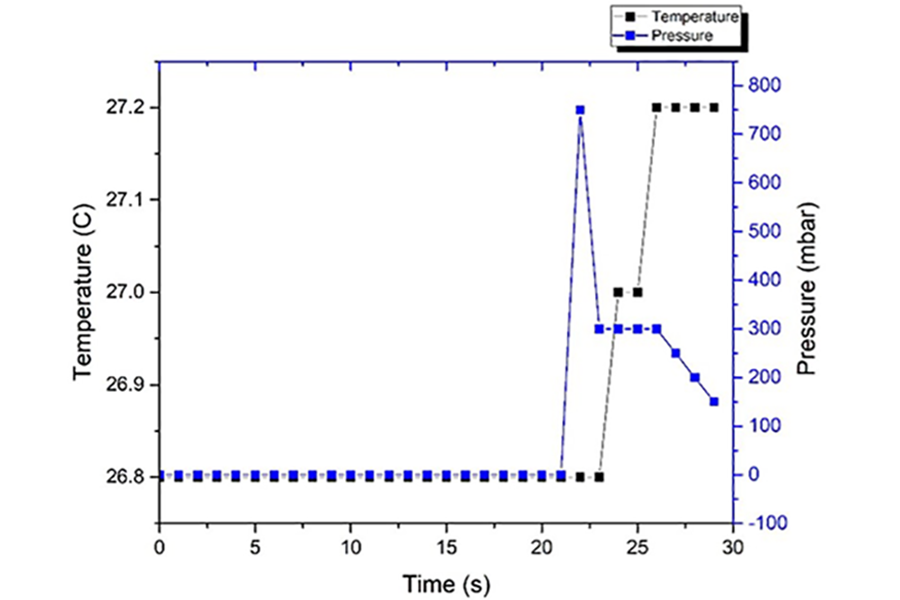
机械化学合成是在混合磨 MM 500 nano 中进行的,使用的是 125 毫升不锈钢研磨罐,并配备了用于气体和压力监控的 GrindControl 系统。元素前体与 32 x 10 毫米不锈钢球一起被引入研磨罐。反应在空气环境下进行,频率为 20 Hz。
使用 GrindControl 系统监控合成过程中机械引起的自发反应事件。研磨 20 秒后,发生了爆炸,导致压力从 0 升至 730 mbars,温度也随之升高。在这一应用中,GrindControl 可以精确观察合成过程中的点火时间,这也是反应中唯一值得关注的参数。[7]
Chemistry in the Mill: Teflon Recycling (PTFE) Using Mechanical Energy
Mechanochemical Recycling of PTFE (Teflon)
Mechanochemistry not only enables new synthetic pathways but also opens up innovative approaches for recycling processes involving materials that are difficult to degrade. A recent example from research shows that even the extremely stable polymer polytetrafluoroethylene (PTFE), better known as Teflon, can be degraded mechanochemically. A decisive factor is continuous mechanical stress: During grinding with the RETSCH MM 400, the reacted surface is constantly removed, exposing new surface area. This allows the reaction to proceed until a large portion of the polymer has been converted. In the study, up to 98% of the PTFE was converted into sodium fluoride and elemental carbon.
The resulting products can then be further utilized, for example as raw materials for battery materials or as fluorine-containing building blocks for pharmaceutical and agrochemical applications.
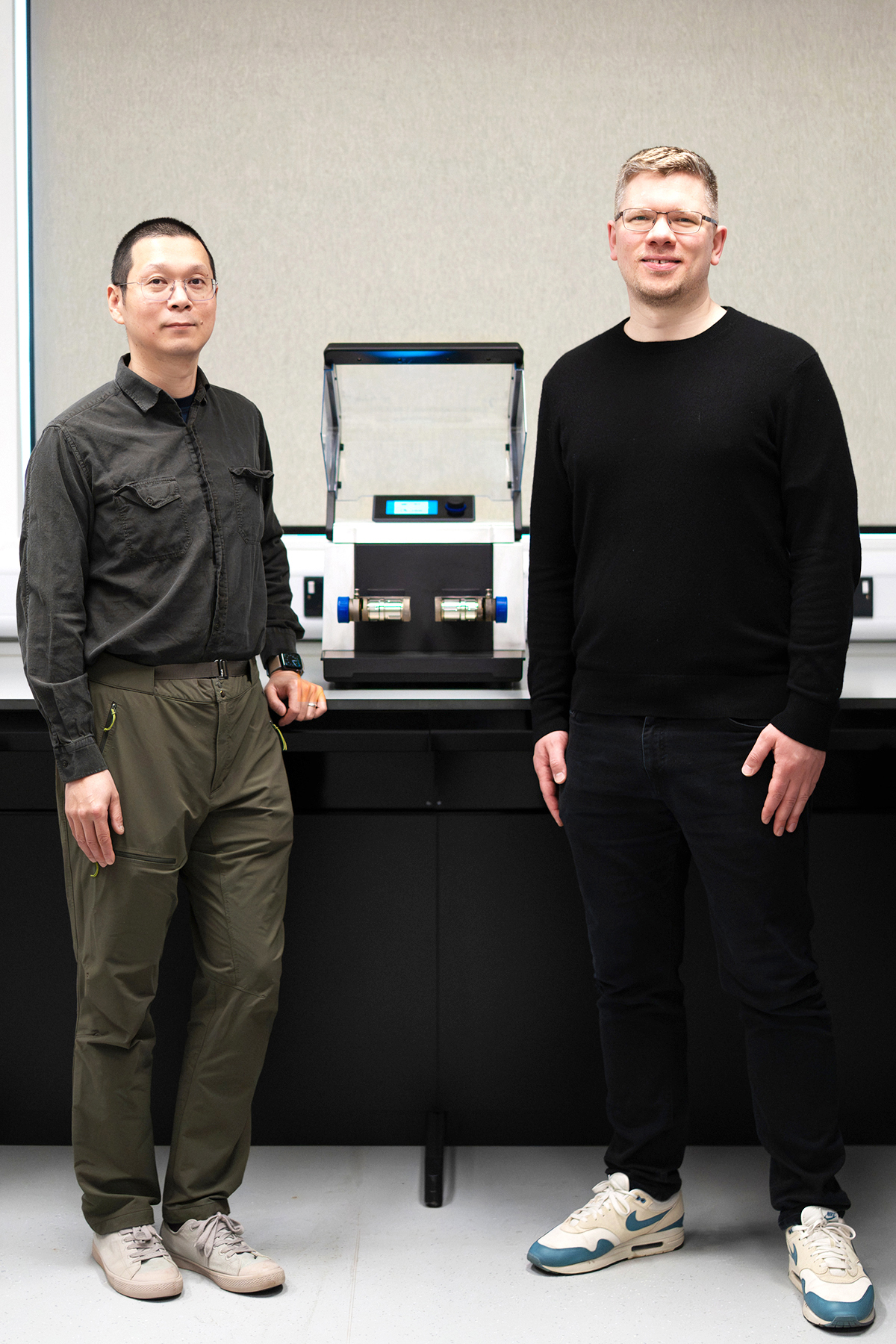
Image on the right: Dr. Erli Lu and Dr. Dominik Kubicki with the Mixer Mill MM 400, which was used to decompose PFAs. [15]
The renowned science program “Forschung aktuell” on Deutschlandfunk radio presented this research approach and its significance for future recycling technologies.
audio
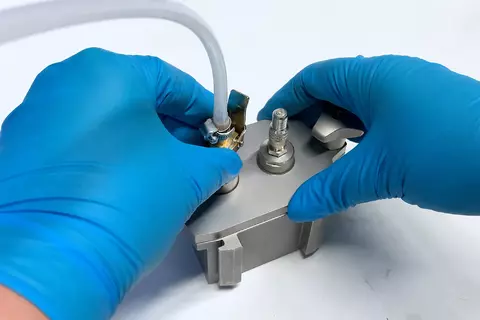
Aeration lids from RETSCH
通气顶盖经过专门设计,旨在提升实验室研磨过程的效率与安全性。在处理需控制环境的物料时(如湿法研磨或操作活性物质),其优势尤为显著。此时可通过氮气等惰性气体冲洗研磨罐,置换瓶内包括氧气在内的环境气体。 通气顶盖具还支持将气体直接注入研磨罐,这对特定化学反应或维持惰性环境至关重要。研磨罐可承受高达5bar的压力,有助于在研磨过程中促进气体分子融入反应体系。 此外,通气顶盖可使研磨罐直接连接至分析仪——既可在行星式球磨机(或Emax设备)运行后连接,亦可在MM 500 nano或MM 500 control运行过程中连接。此配置便于分析研磨过程中释放的气体或化学反应产生的气体。盖体配备多种不同材质内衬——如不锈钢、氧化锆和碳化钨——使同一顶盖可适配不同研磨罐类型。
混合磨 MM 400 中机械化学反应的再现性
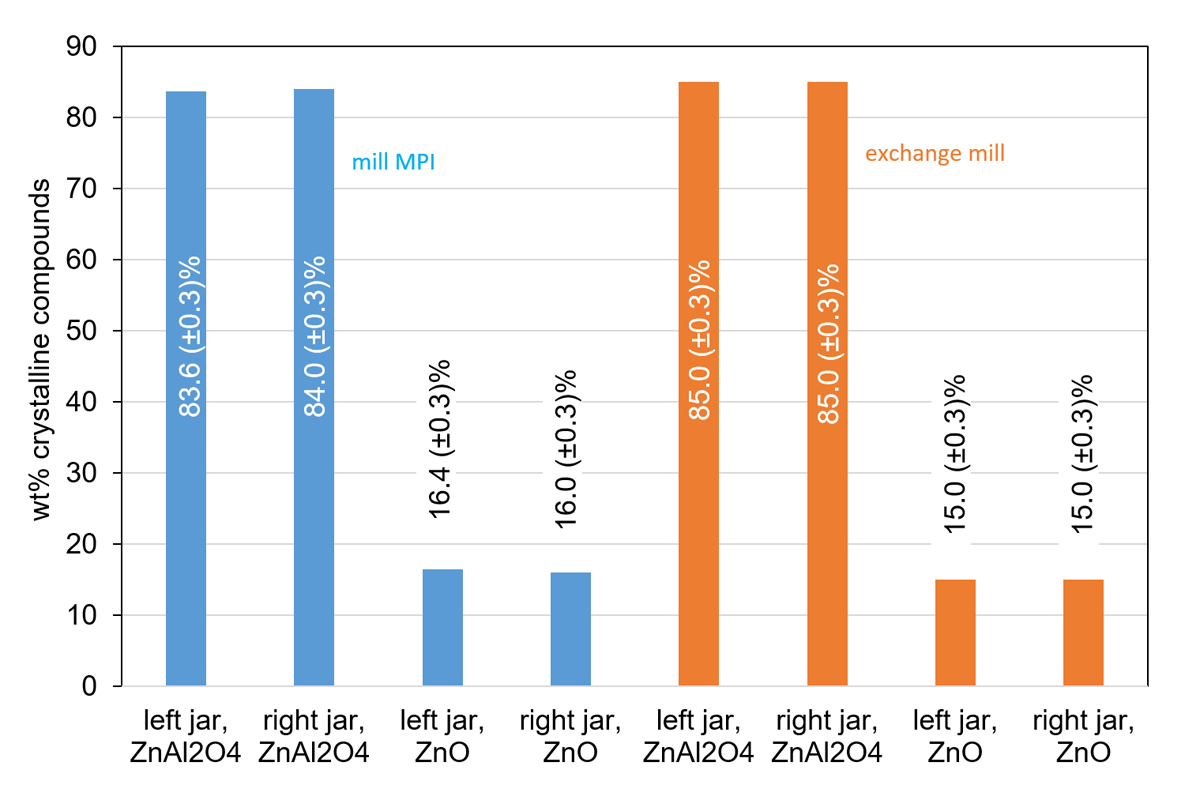
重现性是科学研究的基本原则,对于确保科学发现的可信度和可靠性至关重要。我们对混合研磨机 MM 400 进行了机械化学反应重现性测试,结果证明它在多次重复过程中,无论是夹持位置,还是不同设备之间,都具有极佳的重现性。[8]
频率从 30 赫兹到 29 赫兹或 28 赫兹的微小变化都会影响反应的产量。最重要的是,混合碾磨机必须保持一个设定值,例如 30 赫兹,并且不能偏离该值。附带校准证书的 MM 400 可以满足这一前提条件。
机械化学反应γ-Al2O3 + ZnO -> ZnAl2O4 使用 25 毫升研磨罐、2 x 15 毫米研磨球、1 克研磨剂,在 28 赫兹、29 赫兹和 30 赫兹频率下连续进行五次,每次 30 分钟。左右夹持台之间的比较显示结果具有很高的重现性,5 次试验之间的比较也是如此。
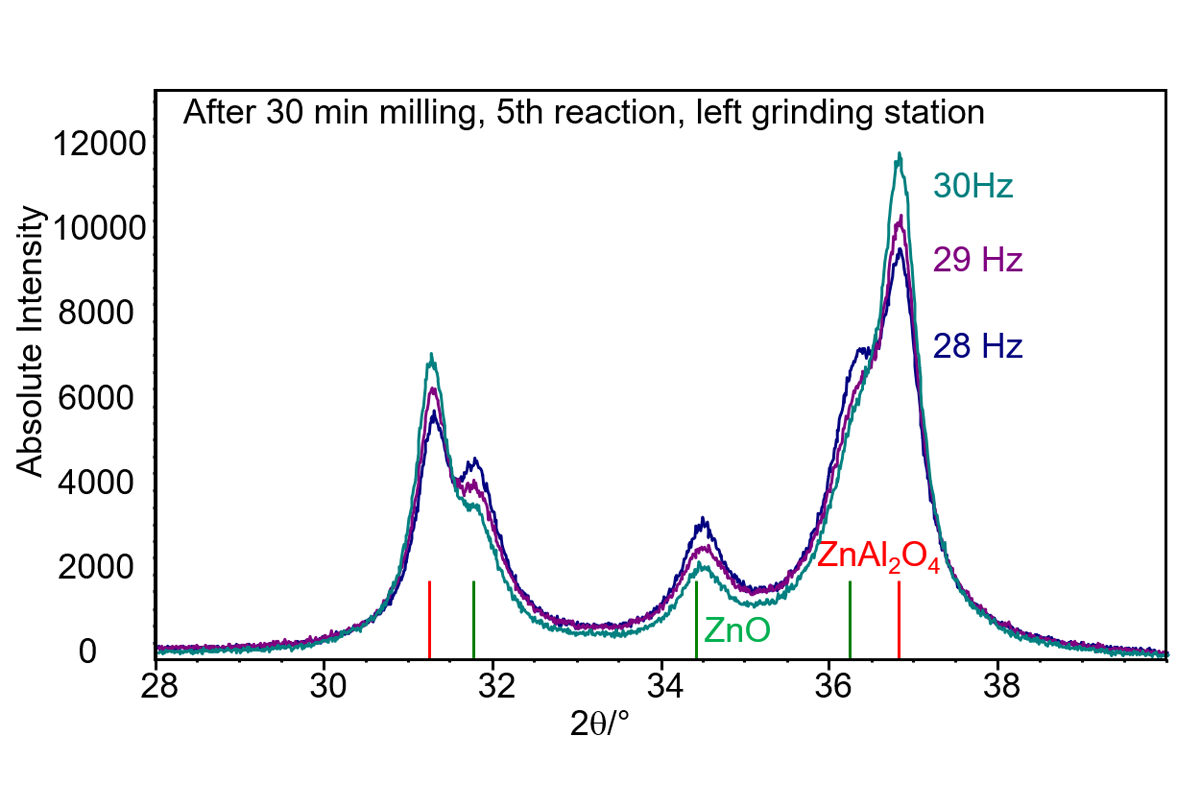
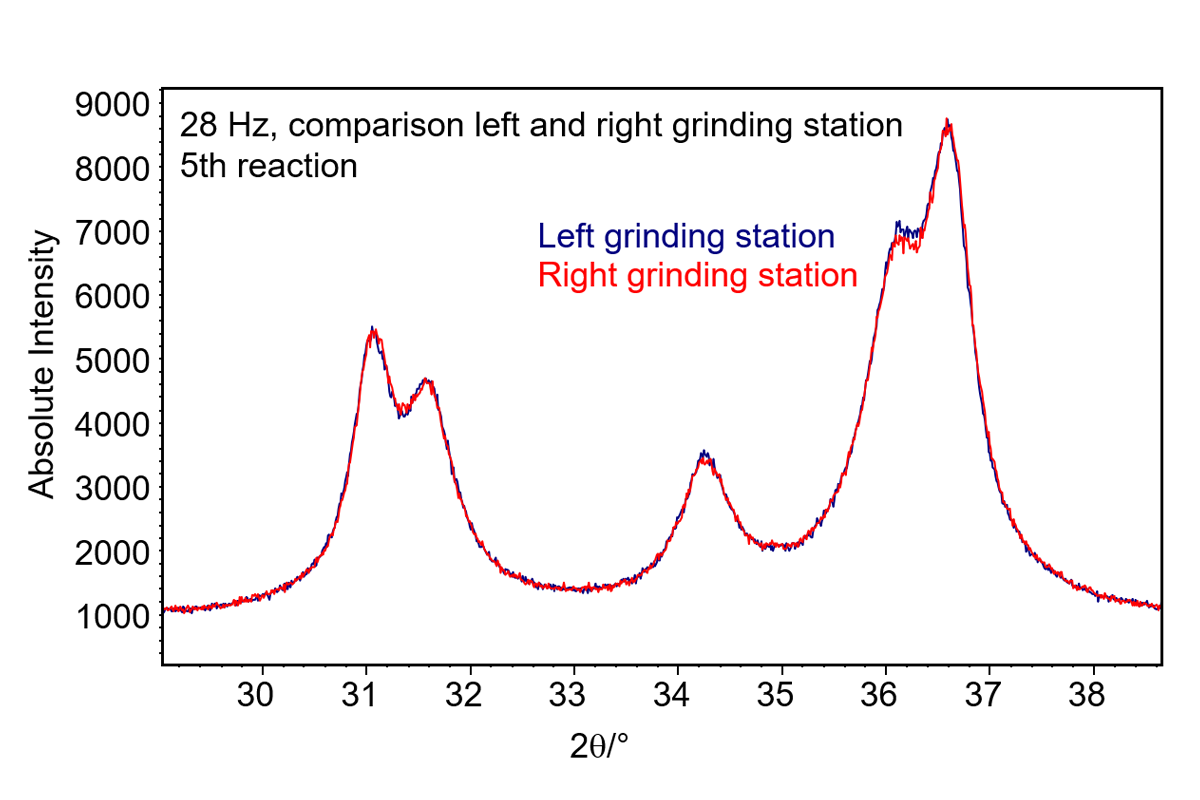
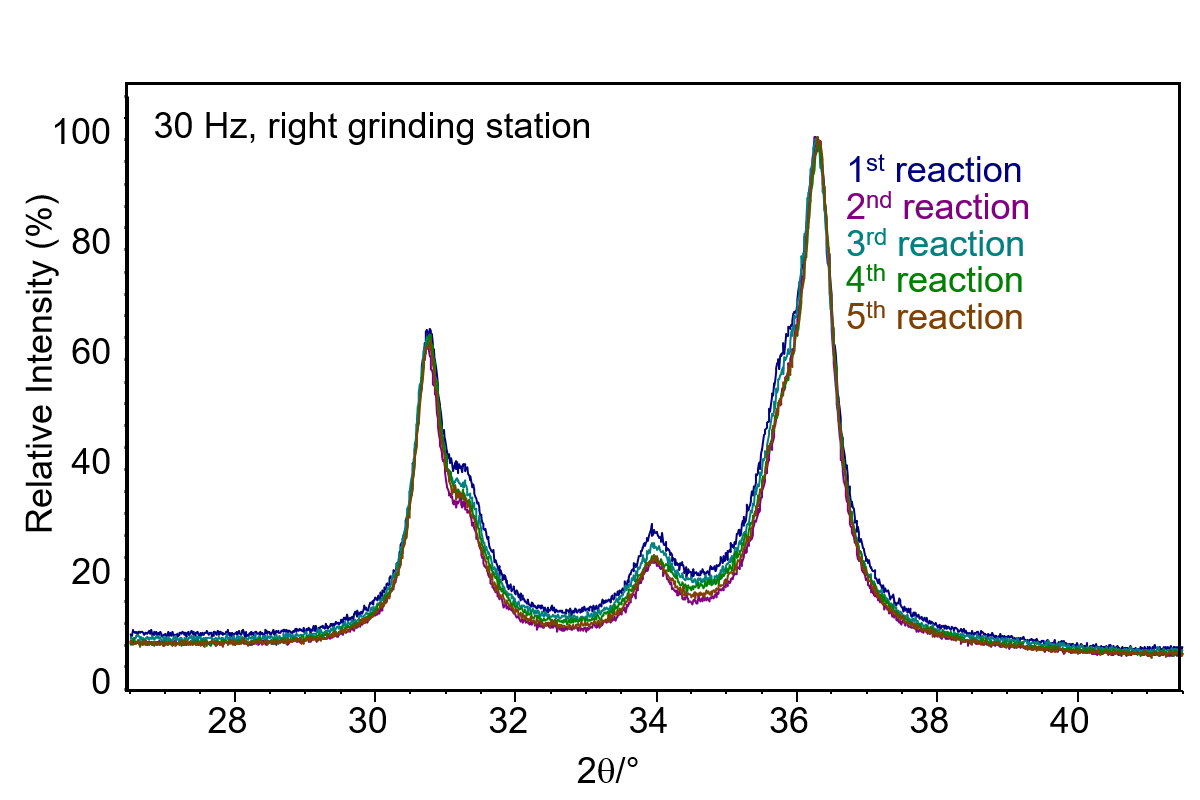
机械化学反应 γ-Al2O3 + ZnO -> ZnAl2O4后的 XRD 图样:左图:28 Hz、29 Hz 和 30 Hz 下的研磨,第五次反应后的结果。中:第 5 次反应时 28 Hz 左右研磨台的对比。右图在 30 赫兹频率下的第 1 至 5 次反应,右磨削站。结果由 Claudia Weidenthaler 小组提交。[8]
使用另一台 MM 400 设备重复实验,以比较两台磨机的结果。在 30 Hz 频率下进行的 5 次测试中,左磨站和右磨站再次验证了出色的重现性。
联系我们获取免费的建议

通过我们的白皮书和文章了解更多信息
From Screening to upscaling - Solutions for CO-Grinding
Different crystalline forms of a drug, known as polymorphs play a crucial role in the pharmaceutical industry, as they can significantly impact the physical and chemical properties of a drug, such as solubility, stability, and bioavailability, These polymorphs can exhibit varying characteristics, which can influence the drug's performance and effectiveness. Polymorph screening is an essential process in drug development, as it helps identify stable forms of a drug with desirable properties, ultimately improving drug formulation and performance.
Green Cement - How Ball Milling Activates Clay for A Sustainable Future
The construction industry is rapidly evolving to meet the demands of sustainability, and green cement is at the forefront of this transformation. Traditional cement production is one of the largest sources of CO₂ emissions, mainly due to the energyintensive process of heating limestone and burning fossil fuels. Green cement tackles this issue by incorporating Supplementary Cementitious Materials (SCMs), such as activated clays, fly ash, and slag, which replace part of the conventional clinker - the primary source of emissions in cement. Activated clays are especially promising: they are abundant, locally available, and, when properly processed, can significantly reduce the carbon footprint of cement production.
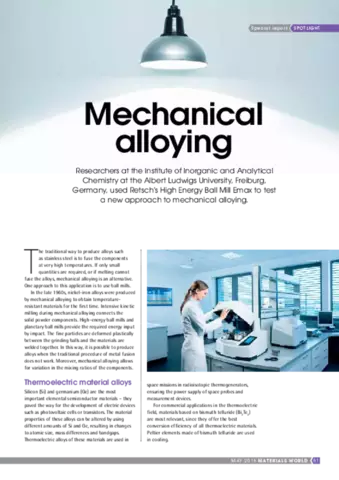
Mechanical Alloying with High-Energy Ball Mills
The traditional way to produce alloys such as stainless steel is to fuse the components at very high temperatures. If only small quantities are required, or if melting cannot fuse the alloys, mechanical alloying is an alternative. One approach to this application is to use ball mills like the High-Energy Ball Mill Emax.
Mechanochemistry: Preparation of Graphite for Adsorbing Hydrocarbons
Oil spills in the sea represent a serious threat to aquatic systems, affecting marine life, contaminating shores, and disrupting ecological balances. Therefore, it is essential to develop effective solutions to mitigate this problem. In this video, we will explore an innovative alternative for the preparation of expanded graphite, a material with a high capacity for adsorbing hydrocarbons in water.
Mechanochemistry: Working Toward a Sustainable Future
In the light of sustainability and Green Chemistry, mechanochemistry offers fast reactions in a solvent-free environment. Mass productivities often exceed the solvent-based reaction equivalents, and the work-up procedures are generally easier. Beside thermal, electrochemical and photochemical energy supply, a less known form of mechanochemistry is based on energy input by impact and shearing forces; typically ball mills are used to conduct those reactions. This article gives examples how mixer mills and planetary ball mills are successfully used to conduct mechanochemical processes.
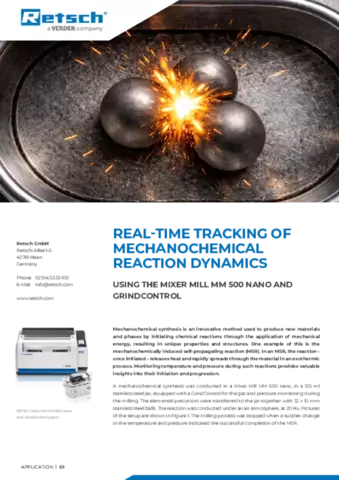
Real-time tracking of mechanochemical reaction dynamics
Mechanochemical synthesis is an innovative method used to produce new materials and phases by initiating chemical reactions through the application of mechanical energy, resulting in unique properties and structures. One example of this is the mechanochemically induced self-propagating reaction (MSR). In an MSR, the reaction - once initiated - releases heat and rapidly spreads through the material in an exothermic process. Monitoring temperature and pressure during such reactions provides valuable insights into their initiation and progression.
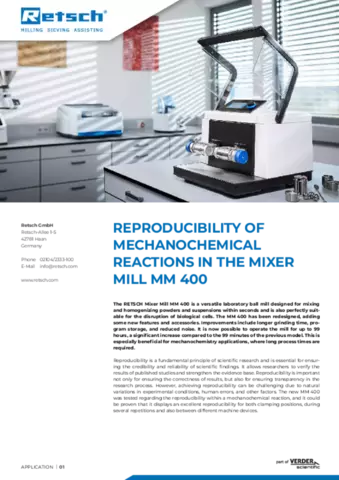
Reproducibility of Mechanochemical Reactions in the Mixer Mill MM 400
Reliable results can only be obtained with reliable instruments. The Mixer Mill MM 400 is known for its ease of use and fast grinding in terms of sample preparation prior to quality analysis. Conducting various mechanochemical reactions we have proven that the MM 400 provides reproducible results for both grinding stations with minimal standard deviations between different processes. This is due to the consistent frequency which is stable and reproducible in processes over time. It could also be demonstrated that results obtained with different MM 400 devices are also reproducible.
参考资料
[1] Wilm Pickhardt, Claudio Beakovic, Maike Mayer, Maximilian Wohlgemuth, Fabien Joel Leon Kraus, Martin Etter, Sven Grätz, and Lars Borchardt: The direct Mechanocatalytic Suzuki-Miyaura Reaction of small organic molecule. Angew. Chem. Int. Ed. 2022, e202205003.
[2] Ma, X., Yuan, W., Bell, S. E., & James, S. L. (2014). Better understanding of mechanochemical reactions: Raman monitoring reveals surprisingly simple ‘pseudofluid’ model for a ball milling reaction. Chemical Communications, 50(13), 1585-1587.
[3] Reaction scheme and performance of the experiments: Dr. Sven Grätz, Ruhr-University Bochum, Faculty of Chemistry and Biochemistry, AG Prof. Borchardt.
[4] Reaction scheme and performance of the experiments: Prof. Andrea Porcheddu, University of Cagliari, Chemical and Geological Science Department (Italy).
[5] Reaction scheme and performance of the experiments: Prof. Stuart James, Queens University Belfast, School of Chemistry and Chemical Engineering (UK).
[6] Jan-Hendrik Schöbel, Frederik Winkelmann, Joel Bicker, and Michael Felderhoff; Mechanochemical kilogram-scale synthesis of rac:ibuprofen:nicotinamide co-crystals using a drum mill; RSC Mechanochemistry, 2025, DOI: 10.1039/D4MR00096J
[7] Maximilian Wohlgemuth, Sarah Schmidt, Maike Mayer, Wilm Pickhardt, Sven Graetz, and Lars Borchardt, Solid-State Oxidation of Alcohols in Gold-Coated Milling Vessels via Direct Mechanocatalysis. Angew. Chem. Int. Ed. 2024, e202405342.
[8] Reaction scheme and performance of the experiments: Prof. Dr. Claudia Weidenthaler, Research Group Leader Heterogeneous Catalysis Powder Diffraction and Surface Spectroscopy, Max-Planck Institut für Kohlenforschung, Mülheim an der Ruhr.
{LL::products.mm400.cocrystal.dominik.da.reference}}
[10] Kapish Gobindlal, Zoran Zujovic, Jacob Jaine, Cameron C. Weber, Jonathan Sperry; Solvent-free ambient temperature and pressure destruction-of PFSAs under MCD presents a detailed study on the mechanochemical destruction (MCD) of perfluorosulfonic acids (PFSAs), Environmental Science & Technology 2023, DOI: 10.1021/acs.est.2c06673.
[11] Recording of the video and performance of the experiments: Imelda Octa Tampubolon (PhD. student) and Matej Baláž (leading researcher, both Institute of Geotechnics, Slovak Academy of Sciences) and Tomislav Stolar (post-doctoral researcher, Division 6.3 – Structure Analysis, Federal Institute for Materials Research and Testing (BAM), Berlin). The experiment was performed at BAM.
[12] Maximilian Wohlgemuth, Sarah Schmidt, Lars Beißel and Lars Borchardt; Ligand-free reductive amination via Pd-coated mechanocatalysis. The Royal Society of Chemistry 2025, DOI: 10.1039/d5cc04707b.
[13] Adrian H. Hergesell, Claire L. Seitzinger, Justin Burg, Renate J. Baarslag and Ina Vollmer; Influence of ball milling parameters on the mechano-chemical conversion of polyolefins. The Royal Society of Chemistry 2025, DOI: 10.1039/d4mr00098f
[14] Tatsiana Nikonovich, Yao Yu, Mikko Korkiakoski, Chengji Yang, Iris Seitz, Daniel Langerreiter, Mauri A. Kostiainen, Eduardo Anaya-Plaza, and Sandra Kaabel; Solid-State Synthesis of Cationic Cellulose Fibers from Low-Processed Cotton for Efficient Virus Capture; ACS Sustainable Chemistry & Engineering 2025 13 (42), DOI: 10.1021/acssuschemeng.5c07884[15] With permission of Dr Erli Lu, Associate Professor in Mechanochemistry & Sustainable Synthesis School of Chemistry, University of Birmingham