




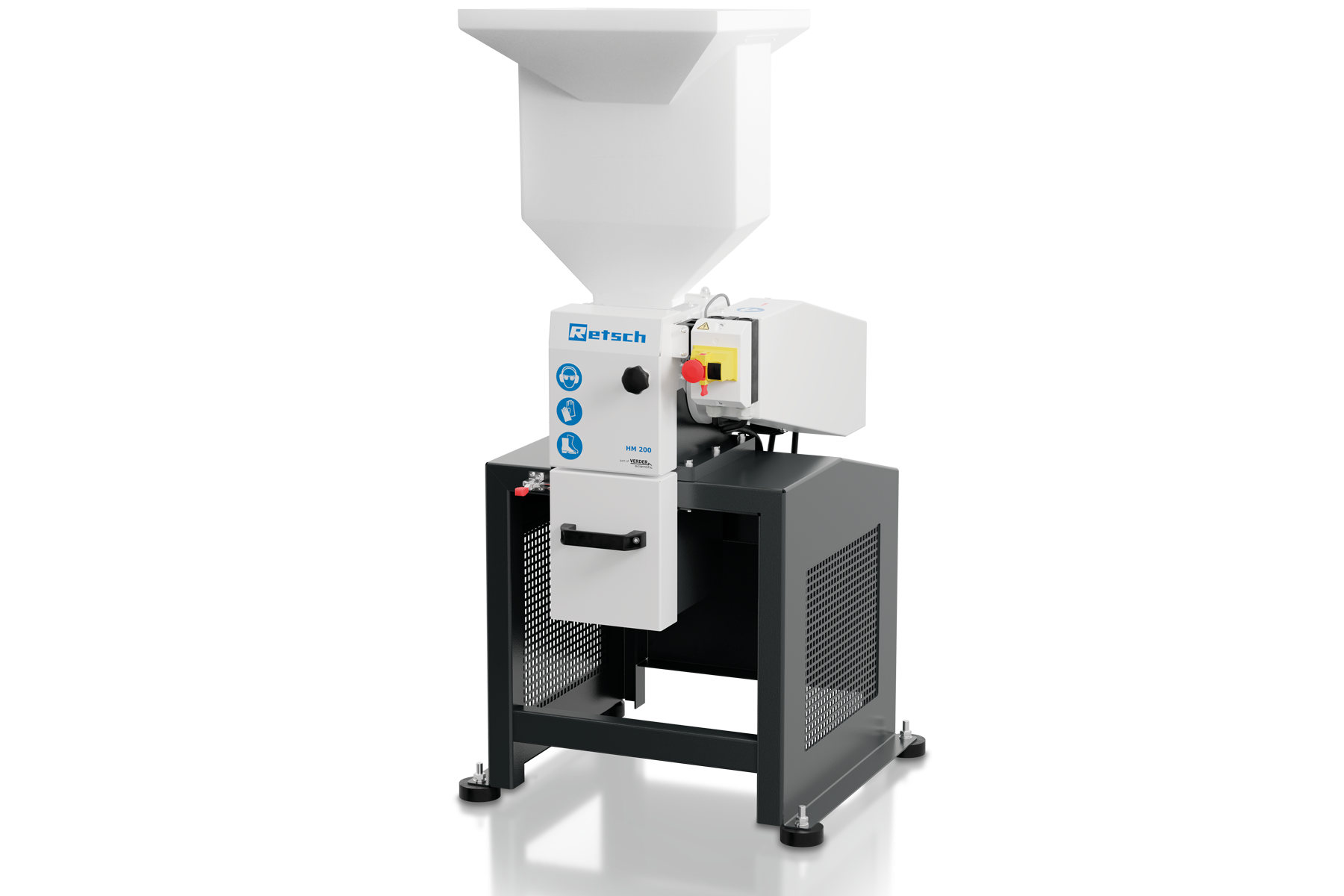
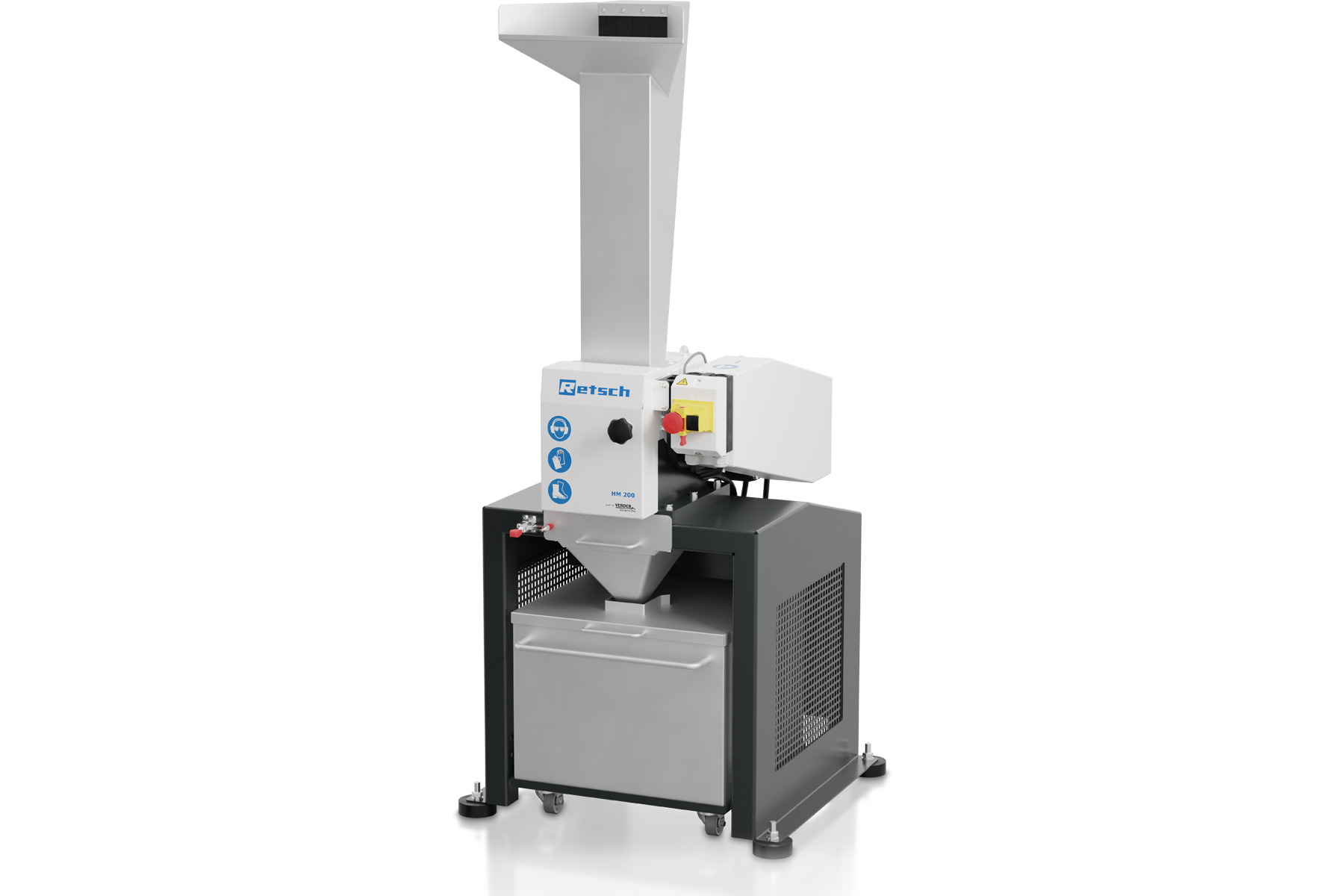
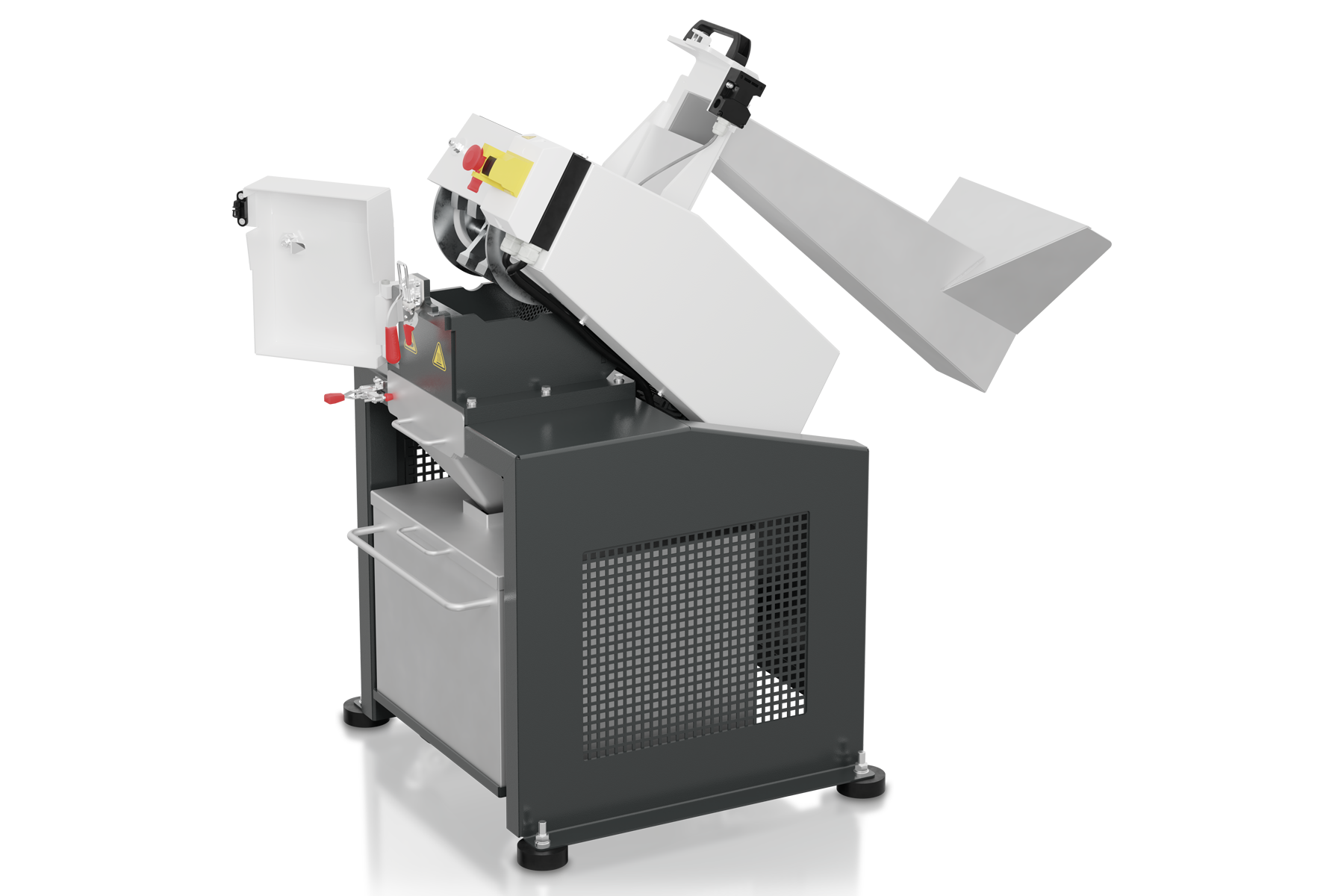

Broyeur à marteaux HM 200 Caractéristiques techniques
| Applications: | coarse and pre-crushing, desagglomeration |
|---|---|
| Field of application: | agriculture, geology / metallurgy, glass / ceramics, coal, chemistry / plastics, construction materials, engineering / electronics, environment / recycling, food / feed |
| Feed material: | medium-hard, hard, brittle, tough, fibrous |
| Size reduction principle: | impact, shearing |
| Max. feed size: | < 100 mm |
| Final fineness: | < 0.8 mm |
| Batch size / feed quantity: | up to 30 l depending on collecting receptacle |
| Speed at 50 Hz (60 Hz): | 3000 min-1 (3500 min-1) |
| Throughput: | 1500 kg/h |
| Rotor peripheral speed: | 31.4 m/s |
| Rotor diameter: | 200 mm |
| Types of rotors: | 10 swing hammer |
| Dry grinding: | yes |
| Wet grinding: | no |
| Cryogenic grinding: | no |
| Material of grinding tools: | hardened steel 1.0503 (hammers); steel 1.0330 (sieves) |
| Sieve sizes: | 2 / 3 / 4 / 5 / 6 / 8 / 10 / 15 / 40 mm |
| Dust extraction unit: | yes |
| Process line version: | yes |
| Collector capacity: | 10 l, 30 l, continuous outlet |
| Drive: | 3-phase motor |
| Drive power: | 1.5 kW |
| Electrical supply data: | different voltages |
| Power connection: | 3-phase |
| Protection code: | IP 54 |
| W x H x D closed: | 700 x 1570 x 750 mm |
| Net weight: | ~ 150 kg |
| Standards: | CE |
Broyeur à marteaux HM 200 Téléchargement

Catalogue général
Fiche produit HM 200
Télécharger
pdf Français (~2 MB)
pdf Anglais (~2 MB)
pdf Chinois (~2 MB)
pdf Espagnol (~2 MB)
pdf Polonais (~2 MB)
pdf Allemand (~2 MB)
pdf Russe (~2 MB)
pdf Turque (~2 MB)
pdf Roumain (~2 MB)
pdf Bulgare (~2 MB)
pdf Norvégien (~2 MB)
pdf Japonais (~2 MB)
pdf Néerlandais (~2 MB)
pdf Coréen (~2 MB)
pdf Hongrois (~2 MB)
pdf Portugais (~2 MB)
pdf Italien (~2 MB)
pdf Slovaque (~2 MB)
pdf Tchèque (~2 MB)
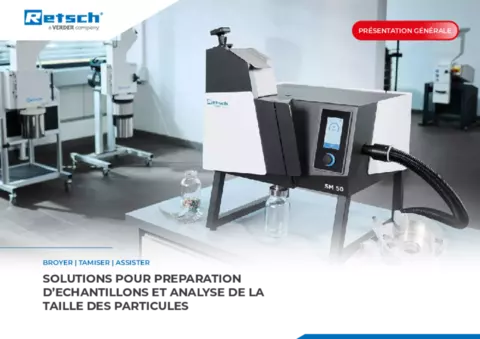
Présentation Générale
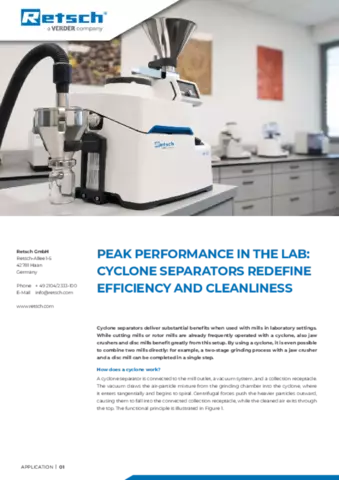
How Cyclone Separators Redefine Efficiency and Cleanliness in the Lab
Cyclone separators deliver substantial benefits when used with mills in laboratory settings. While cutting mills or rotor mills are already frequently operated with a cyclone, also jaw crushers and disc mills benefit greatly from this setup. By using a cyclone, it is even possible to combine two mills directly: for example, a two-stage grinding process with a jaw crusher and a disc mill can be completed in a single step.